Category Archives: Hasan Askari 1932-2008

A Changing Perspective on Life

A Changing Perspective on Life

by Mahjabeen Fathima

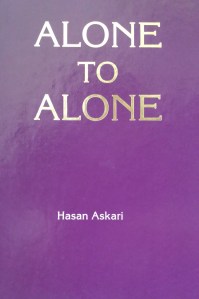
Mahjabeen 1My perspective “life” has considerably changed on this trip to the UK. To support my answer I quote these words from the book Alone to Alone by Hasan Askari, author of many books on spirituality, “God is the Friend and a Protector of those who believe. From the depths of darkness He will lead them forth in to Light. But there are those who deny that there is an Unseen Dimension to this sensible world.”

I came here all the way crossing over continents solely of the intention of spending a lovely time with my sister’s family and exploring the beauty of English soil. I am awed at the beauty of this land which the Almighty had crafted. I fully succeeded in my goal. But with it, my perspective of life or rather my viewpoint has shifted from the materialistic world to the spiritual; from the outer to the inner; from awareness to vision. To live with a purpose and not to get drowned in the mundane routine chores but to awake, arise, ponder and reflect – like a diamond which requires a lot of wear and tear to reach its final destination to rest and be decorated on the jewellers showcase.

I would like to thank my brother-in-law Musa Askari for his enlightening talk on self, soul and spirituality. His sharing of the quote from Rumi suffices to support my enhanced perspective on life, “The Lamps are many but the Light is One!”. My personality is now more at peace. The calm and peace were due to Musa’s motivation on meditation. My heart, soul and body were in complete union during the zikr (remembrance) chant of “Allah Hu”.

Mahjabeen 2As my holiday in the UK comes to an end and I depart I extend my hearty and sincere thanks to my dear sister Sarwath and her family for making my stay a welcoming and comfortable one.

I will go back to my country, India, with full awareness to concentrate on the Higher Unity of my “self” and my “soul”. We are a soul together and each one of us is a soul within One Self.

The words of Plotinus from the Enneads herald my perspective of life going forward. “This is not a journey for the feet; the feet bring us only from land to land; nor need you think of coach or ship to carry you away; all this order of things you must set aside and refuse to see: you must close the eyes and call instead upon another vision which is to be waked within you, a vision, the birthright of all, which few turn to see.”

*See also :

Spiritual Humanism speech by Hasan Askari delivered in 1995, Hyderabad, India

Journey of Pearls by Musa Askari

Spiritual Human Interview with Clare Short

Clare_election[1] - CopyClare Short formerly MP UK Parliament 1983 until 2010 and Secretary of State for International Development 1997 until 2003 when she resigned from the Gov’t over the Iraq war. Clare Short’s areas work include “slum upgrading in the developing world, transparency in oil, gas and mining, African-led humanitarian action, destitute asylum-seekers in Birmingham, Trade Justice for the developing world and for a just settlement of the Palestinian/ Israeli conflict.”

Sincere thanks to Clare Short for agreeing to this interview. 

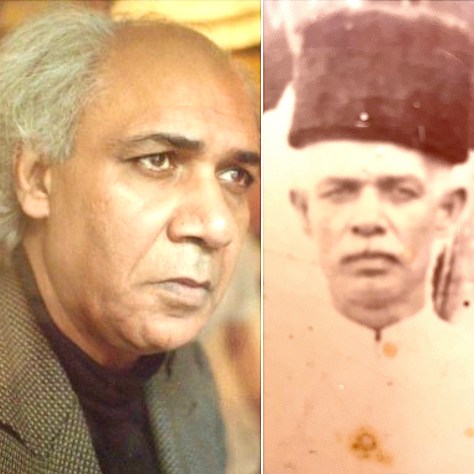
Musa Askari: ROLE OF WOMEN. The following quote is by my late father Prof Syed Hasan Askari about the Indian Sufi mystic        Nizamuddin Auliya, “I used to hear, amidst all that poverty when we had nothing in our house, not even a loaf of bread, my mother saying to me: “Baba Nizamuddin! Wake up! We are guests on this day in the House of God!”. And she used to glow with joy, and her hands were warm while she lifted me and held me in her arms. It was my mother who initiated me upon the path of trust and joy, who liberated me once for all from the slavery to the seasons and the conditions of this world”

The example of Nizamuddin speaks of a beautiful bond with his mother. We hear too little about such bonds situated in conditions of poverty. Their stories at risk of being lost behind a statistical narrative which can dwarf issues of the heart. I would be grateful if you could share your thoughts on what more needs to be done to support women in the poorest parts of the world and why this is so important in helping people out of poverty?

Clare Short: Kofi Annan said some years ago poverty has the face of a woman and her children. The evidence on how best to generate development in society is very clear, educating girls is the most powerful force for development. No one is of course advocating excluding boys from school but in poor countries girls tend to be kept at home to help with household tasks. Girls who have been to school marry later, have fewer children who are more likely to survive and are better at accessing healthcare and increasing the family income. So a commitment to universal primary education, including girls as a first step to full educational opportunities for all is the most important force for beneficial change. This is why it was one of the leading Millennium Development Goals. Of course we should never just do one thing to promote development but the key role that girls and women play is exemplified by this reality.

Musa Askari: GLOBAL NEIGHBOURHOOD. Through various forms of international aid it is possible for people of moral conscience to help improve the welfare of one’s “neighbour”, local to international. As humanity we are each other’s neighbour and this category of “neighbourhood” for me is one of the common grounds where secular and sacred traditions of the world can meet working together for the common good. To what extent in your view have the Millennium Development Goals helped to raise the level of awareness about a “global neighbourhood”? What further needs to be done to foster this sense of universality?

Clare Short: In the ​years of hope at the end of the 1980s and the beginning of the 1990s when the Berlin Wall came down and Nelson Mandela was released from prison, there was a real growth in support for a more just and evenly developed world where all people could live with hope and dignity. And when, at the UN, they started to look for an appropriate way of marking the new millennium, all the countries of the world came together to agree that the systematic reduction of poverty across the world should be the cause that united humanity. ​I​n these years spending on defence and security declined considerably. Then, after September 11, 2001, the obsession with security and military spending overtook the idea of a better safer world of equal development. There is no doubt that the attack on the Twin Towers was very serious crime they killed 3000 people. But the response was irrational. It does not make sense to spend as much on the military as at the height of the Cold War to try to capture a man in a cave in Afghanistan and to persuade people that his ideas are ugly and wrong. President Eisenhower, who was a Second World War general and a ​R​epublican President warned that the American people in his retiring presidential address to beware the military industrial complex. My view is that the military industrial complex faced a set back at the end of the Cold War and used the attack on the Twin Towers to take over again and is reducing the world to a dangerous state and marginalising ​the​ commitment to a world that is safe because all have the chance of a decent and dignified life. This major shift to a massive emphasis on military solutions and the generation of hate and fear has not wiped out the work to achieve the Millennium Development Goals and there has been significant progress across the world. Currently negotiations are being finalised to replace the MDGs, which expire this year, with new Sustainable Development Goals. So​ the battle is not lost and the effort must continue but the stress on military ​​solutions has been a major setback.

Musa Askari: RELIGIOUS DIVERSITY. On affirming religious diversity Muslim inter-faith dialogue pioneer Prof Syed Hasan Askari writes, “I have always looked at religious diversity with a sense of wonder..I was mystified by the fact of diversity itself..I clearly realised that transcendental reality could not be equated with any one religious form..The prospect of a religion reflecting the Absolute absolutely would turn that religion into the most dogmatic and oppressive belief system imaginable..To enter into dialogue is to celebrate the splendour of the infinitely Supremely Good, in the unity and diversity of our faiths. By the theological affirmation of religious diversity, our coming together in dialogue becomes akin to an act of worship; our exclusive witness is transformed into co-witness; our one-way mission is replaced by mutual mission.”

How is the affirmation of global religious diversity reflected in the Millennium and Sustainable development goals please? Should there be a specific goal attributed to affirming religious diversity not only as a sociological fact but also to help foster inter-faith spirituality and dialogue?

Clare Short: There is no commitment to religious diversity​ in either the MDGs or the proposed SDGs but respect for the human rights of each person obviously means respect for their religious sensibilities. And the Universal Declaration Of Human Rights, which is supported, at least in theory, by almost all countries in the world declares that “Everyone has the right to freedom of thought, conscience and religion; this right includes freedom to change his religion or belief, and freedom, either alone or in community with others and in public or private, to manifest his religion or belief in teaching, practice, worship and observance.”​ There were a big group of British theologians who declared back in the 1980s ​that ​all the world’s major religions are equally valuable routes to God. Unfortunately in these times religious labels are getting mixed up with the sense of identity and reflect little of the goodness of the best of religious teaching in all the main religions. Terrible things are being done in the name of religion. There are ugly currents of fanaticism in Christianity, Judaism, Buddhism and Islam. We need to reflect on why this is happening.

Musa Askari: JUSTICE & FAIRNESS. In your recent lecture “Does international Aid work?” you talk about,

“How to make the world safe & sustainable for everybody? A more just & fair world where everyone has a fair chance is also a safer world for everybody.” What do you see as the major obstacles to justice and fairness and what kind of change in thinking needs to take place in your view to begin to overcome the challenges?

Clare Short: I think that international leadership is in a terrible state​ and is making the world more dangerous and unhappy. There is of course need sometimes to use military force to contain and reverse the misuse of violence, in fact I think it is necessary to enlarged the authority of UN peacekeeping missions in for example eastern Congo so that everyone knows that the writ of the UN will be enforced and justice will prevail. But if peace is to come to the Middle East then the international Community must uphold International law in relation to all the countries of the region. Israel is in grave breach of international law according to the judgement of the International Court of Justice and yet nothing is done. Saudi Arabia and the Gulf states and Egypt are in gross breach of the Universal Declaration Of Human Rights and ye​t​ they are treated ​as​ great friends of the west​. ​I am afraid that the days have a long gone when are just settlements for Israel/Palestine would transform the atmosphere in the Middle East but it would start to make a significant difference. In relation to Russia, I believe that expanding NATO up to Russia’s borders and suggesting that Ukraine should join NATO and the EU was provocative and would have enraged any Russian leader. This does not mean that Russian aggression should be ignored but it just compromise should be sought rather than a continuing drive to invent a new cold war.

Musa Askari: VISION. In 1995, on a visit to India, Prof Askari delivered a speech on Spiritual Humanism Democracy has become a political convenience. The great socialist dream has been eroded by the rise of multi-national empires. The uncertainty of world economic markets has made the working classes across the world almost brought to the brink of misery in the third world countries where millions of people do not know what awaits them within ten, twenty years. There is a slow but firm rise of religious, ethno-centric racist ideologies. In Eastern Europe, in the collapsing Soviet Union, in Asia, in Africa and in India as well. In other words the vast human system, its centre is empty. When the centre becomes empty then all sorts of emotive fascist ideologies rush in to fill; to occupy that centre. The hour is crucial. Humanity has to make a serious decision.”

Would you agree we need a new visionary approach, a revival of hope that takes into account the concerns raised above by Prof Askari? Do you see any opportunities please for an alternative narrative to positively address such concerns from either the left or right of the current political landscape?

Clare Short: Yes see my arguments above. The only way to make the world safe is to give up the idea that one country should dominate – what the neoconservatives in the US see as America’s unipolar moment. This is dangerous with a rising China. We need to learn the lessons of the First World War (which was really the cause of the Second World War) where a rising Germany and a declining Ottoman empire was so badly managed that the world ended up in a dreadful conflagration. We need to reinforce the UN by updating the membership of the Security Council and streamlining and making more efficient the UN development agencies. All must agree to abide by international law with no double standards and we must renew our commitment to International Development and make sure that we meet the objective outlined in the draft Sustainable Development Goals that extreme poverty is eliminated from the world by 2030.

Spiritual Humanism


Syed Hasan Askari interviewed by Karen Armstrong on Mysticism 1984

Syed Hasan Askari (1932-2008), inter faith pioneer, responds to Karen Armstrong’s engaging interview (audio) from 1984 on the Sufi Mystical Experience,  Whirling Dervish dance inspired by the Sufi mystic Rumi, Zikr (Remembrance of God). The need for Religious diversity and much more.

The dialogue begins with the question, “What is the aim of a Sufi Mystic?”

Syed Hasan Askari one of the eight important Muslim thinkers Whirlin Kenneth Cragg’s “The Pen & the Faith” writes, “Few thinkers in contemporary Islam have so tellingly explored the issues of inter-religion or undertaken them as strong vocation. Hasan Askari holds a unique position in the search for unity of heart within the discrepancies, real or unreal, of religions in society.”

Selected quotes of Syed Hasan Askari from the above interview:

Zikr :“Remembering God in His attributes, in His Mercy and Power and Love.”

“We remember that God is the Greatest and thereby we deny everything else as great. And then we say that He is One, there is no other. And then we say the Praise and then we say He is Sublime, He is above all we say about Him.”  

“The ultimate goal of Zikr is to transcend Zikr itself.” 

“Doctrine is a conscious individual statement of one’s own form of belief about the ultimate.”  

“Dogma is an embodiment of a particular theological crisis and how it was resolved at a given time in the history of religious thought. There are creeds in Christianity and creeds in Islam which represent those crises in theological thought. But religious life is far ahead of dogmatic statement. For instance when I [Hasan Askari] stand in prayer I don’t say that here stands a “Muslim” with a particular belief statement on his lips…in ritual prayer we don’t enact the dogmatic what to speak of the mystical where the dogma is left behind.” 

“In very high levels of religious life a word becomes an eye and thereby we obtain a new sense, a new vision. But not with the physical eye, not with the eye of the body…..the rational mind is only analytical. It doesn’t give us a totality. One needs an intuition, a sense of partaking in the wholeness of being. Then perhaps we arrive at the level of true words which are also true visions.”

“Dogma is more a matter of institutional identity, continuity and solidarity in any religious life whatsoever. Whereas the mystic is concerned with the religious person, the individual. If man becomes alone before God then he becomes a truly religious person.”

“On one hand I feel, I know and I notice the unity of religious experience transcending image and symbol and dogma and institution and culture and language. And on the other I notice a variety, a diversity, a differential dynamics both between religions and one particular religion. And therefore I have to affirm the mystical value of diversity.”

“I would say that if we who say that we believe in God who is Sublime and Infinite and Transcendental and Almighty…how could that God be equated with one form of one religious belief?”

“Every man, every woman is potentially a mystic. It is more a matter of moving from a state of sleep to a state of awakening.”

“There is a world religion, namely, the Mystical.”

“I made a simple discovery some twenty years ago [1960s] in India that my religion was one among many. And then my journey began and now I feel at home in a Church or a Synagogue or a Mosque. A man of God should feel at home wherever one is. I should also say that a man of God is never alone. The invisible Companion, the invisible Friend is always there.”

 (apologies for the sound quality however it is hoped you will still find the conversation deeply interesting)

Last post – farewell to my local post office

Upon learning recently of the pending closure of our local post office I wrote the following letter of thanks to the couple who had run the post office for many years.

“I am writing to express my sincere thanks to you and your staff over the years for the kind service you have provided to the community in which you have worked all these years. I was sad to learn the post office would be relocated to another site at the end of the month. I was also sad to learn that you both would not be moving to the new site. I am sure this will be a loss to the community. I wish you and your family well for the future and hope that it brings you all that you hope for.

It would be remiss of me not to also offer deep gratitude on behalf of my late father, Prof. Syed Hasan Askari, for the kindness with which you treated him and helped him as he collected his pension and helped him in dispatching books and letters he was sending to people home and abroad. Those that had the opportunity to meet him in everyday life, taxi drivers, shop keepers, his barber and yourselves at the post office have always recalled him with fondness. This has been one of the great sources of comfort for me in helping me deal with his absence over the years. He passed away in early 2008. To see the faces he would have seen recollect him and somehow recall him again is deeply moving if somewhat un-noticeable to any passer-by. To meet him again in the memories of others has always been very special to me and often given me pause for thought and in doing so, for that transitory moment, he feels not to have departed at all as a tearful smile comes to pass. Such is life, behind the everydayness of life we all are living other lives, inner lives perhaps, or inner moments which are to be felt within oneself. Therefore, on a personal note I wanted to thank you in this regard very much.

To serve people in the manner in which I have observed during my visits to your post office I think needs special recognition. To that end I think the qualities of patience, a calm voice, soft speech, a smile, a respect for all people and a sense of treating people fairly shine through for me and go far beyond mere customer service. In my experience one could only display such virtues consistently over the years because such virtues are an inherent part of your nature and goodwill as people. I think in a microcosm such virtues as you have displayed we could all benefit from.

At times I am sure it may have felt like over the years the whole world has somehow walked through those doors and that for me is a wonderful thought. All the various cultures and nationalities of humanity wanting your help to send letters or parcels of kindness to their loved ones. Each coming through those doors with their own hopes and dreams. Equally from your post office to the world messages of warmth and love have been sent, from presents to postcards. One can only wonder with what joy they have been received.

However, we know the world is changing and such messages no longer needed to be hand delivered when an instant message from one’s telephone will suffice. Whilst this has tremendous advantages in communicating I cannot help but feel a sense of loss that another kind of communication is fading. Namely, the act of sitting down to write a letter, to take the time to visit a post office and there to encounter another person, to meet humanity in its everydayness.

This to me is part of the secret fabric of life. That a stranger will walk in to a post office, ask for help from a person they have never met before behind the counter to send a much awaited letter to a loved one waiting somewhere in the world watching each day if the post today will deliver the letter they left in your safe hands for dispatch.

It is this act of “handing over in trust”, a much cherished message between strangers, is to me one of the hopes I place my hope in for humanity at this present hour. We never know how our everyday act affects others so beautifully and it is also to that unknown and perhaps unknowable aspect of your work I wish to pay tribute and hope the kindness you have shown others shines as light on your path in your life ahead.

With every good wish.

Yours sincerely,

Musa Askari”

On Leaving Stratford Upon Avon

On leaving from a visit to Stratford Upon Avon, birthplace of William Shakespeare, Musa Askari reflects on the experience.

IMG_0087

IMG_0106

Alone to Alone – The Introduction

alonealoneThe following is the Introduction to a remarkable book by the late Syed  Hasan Askari  entitled “Alone to Alone – From Awareness to Vision”, published 1991. It is a journey of self-discovery, inner path, a spiritual quest within & through an inter-religious dimension inspired by a vision to revive the classical discourse on Soul. This blog is dedicated to the universal, spiritual humanist vision of Prof. Syed Hasan Askari & contains various reflections from this book which is presented in seven chapters.  Each chapter is known as a “Mirror”, there are Seven Mirrors.

Introduction narrated by Musa Askari

“You are now entering upon a path. As you continue your journey, you will come face to face with one mirror after another. The path and the mirrors are all inside you.

The images you see in each mirror are at times images of a discourse, at other times of one or another symbol. Sometimes a vision will open up before you. Sometimes a voice will be heard. All of it is an initiation into your own reality.

There are several straight discourses. Then there are stories. Both the discourses and the stories constitute one fabric. They intersect and interpret one another.

At times you may find certain things partly or even completely unintelligible, or vague and abstract. When you will return to them, they will gradually become transparent. You will experience an unbroken sense of inner perception even where you notice that the mirrors are veiled. You are a guest. There is an air of hospitality as you move from vision to vision.

It is now both your and my journey into the realm of the Soul. I request you to be cautious for the territory we now enter is totally different from our ordinary world. We shall be changing the habits of our thought and putting on new garments. You will notice the change in atmosphere as soon as you stand before the first mirror.

The journey begins in the name of Plotinus. We were invited by him a long time ago to make this ascent. The words, Alone to Alone, are his, and they sum up his entire call.

Prof. Syed Hasan AskariIt was a couple of years ago one night while going through The Enneads that I had the experience of seeing in a flash all the implications of the Discourse on Soul for human thought and civilization for centuries to come. I felt within myself a convergence of the thought of Plotinus and that of my theistic faith nurtured by a consistent inter-religious perspective. The present work grew quite spontaneously out of that intuition over the last two years (1989  – 1991), and after much thought I place it into your hands both in trembling and trust, and in hope that it may ignite in your soul the same longing and in your mind a fresh zeal to rethink your conceptions about humanity, world, and God.” Syed Hasan Askari

For stories & reflections from the book Alone to Alone please click on the following titles available on this blog:  

The Lord of the Humming Bird, I am that Tree, The Limit is the Threshold, The Seven Steps, Self Remembering, God is on Both the side, The Are Only Four Communities, The Feet of our Lady, Four Breaths, If You Find Me, Towards Unity, Rebirth Through My Son, Baba Nizamuddin, The Grand Canyon, The Snow The Cloud & The River, Prayer For My Parents, Seven Mirrors.


HUMANITY

Syed Hasan Askari’s thoughts from “Towards A Spiritual Humanism”  (published 1991)

“Let us reflect further on this shared value of humanity because there is so much in it. I feel that both the humanist and religious traditions sound almost simplistic or monolithic when discussing this category, namely, the human.

Syed Hasan Askari
Syed Hasan Askari

Let me share a few perspectives to deepen this value because this holds the key for our progress in dialogue. Firstly, the humanistic view, namely, that we are first of all human, appears to me primarily an extension of one’s identity in space – from one’s own house to the entire planet, or to use the popular expression for the planet in our times – the global village. This is not enough for me, because it is an aspiration only in a spatial-physical mode of a greater aggregate,  whereas it may also be viewed as a metaphor for a sympathy across distances, between people, between all humanity. That sympathy cannot be a material bond, or even a bond which is merely psychological. It should be a spiritual bond.

This makes me bring in another dimension of the aggregate of humanity, namely time. Holding on to the same value of humanity, I should say that across time – across all time both past and unborn time, there should be the unity of the human self. As soon as we invoke time as a dimension of unity, the collapse of the material expression of unity is self-evident.  It is this which is celebrated in the religious, or to be very specific, in the Christian Catholic notion of communion, particularly the communion of saints.

Setting aside the religious connotations, on a purely pragmatic level, the unity of the humans both in space and time, presupposes an internal unity. So, I request my humanist friends to take their value of humanity more deeply and have the courage to draw all the conclusions possible, neither hampered nor tempted by any ideological options. Therefore, our criterion in this discourse is that no ideological criterion should come in the way of our celebration of human unity as a whole.

I have another perspective. I don’t see humanity, even when we take the dimensions of both space and time together, as one monolithic whole. We have many humanities within one humanity, and we have to be extremely careful in differentiating, deep within our own personalities, four humanities!

The first humanity is co-terminus with our physical status as material beings dependent upon water, air and food; the extension of this principle is our dependence upon urban water supplies and refrigeration; upon the technology we have created and all the comforts that principle involves and the culture which it creates. There are vast numbers of people who do not progress beyond this level.

The second humanity is also widespread, and it includes those who have fallen in love with the images they have created in their philosophies, in their religions, and in their doctrines. They are clever and self-conscious people. However, they are in a state of hypnosis. They cannot move from the outward profiles of their doctrines and religions  – yet they too are human.

The third humanity is free from the physical, free from outward profiles and forms; it is inward looking and holds onto its own essential being. It is this humanity which, in my view, holds the key to the sympathy, the resonance of feeling across space and time. It is this which creates philosophy universally, which creates science universally, which creates an intelligible discourse across races and cultures and nationalities, and which is to me the goal of humanity.

The fourth humanity is almost celestial, almost super-human, almost trans-human. It is one with the entire cosmos which is the ultimate principle of unity. It is like a spark of light in each one of us, even in those who are lost in the physical world, even in those who are wrapped up in the traditional profiles of identity, dogma and doctrine.

So, when I hear the word “humanity” I respond to it emotively because I hold that perspective, but at the same time I am disturbed, because we may lose sight of the hierarchy and differentiation, on account of our obsession with uniformity of the physical image of man. I am not subscribing to any elitist notion of an inner or hidden group of mystics. I am saying that both ontologically and psychologically humanity is a highly differentiated principle and it is because of this differentiation that it is human. If it is not differentiated it becomes a technological, mechanistic principle. It is in this sense I consider humanism as pointing to this differentiation, not submerging it. Otherwise, we become unfair or unjust to our own inner hierarchies.

Let us take this opportunity to point out that most so-called religious people also have a very simplistic view of humanity which is in one sense more dangerous that the simplistic view of popular humanism because they equate their humanity with their collectivity. For them, humanity is co-terminus with their particular religious congregation. For example if you are a Christian you will consider yourself human; if you are Muslim you will consider yourself human; but those who do not fall within the collectivity to which you personally belong are not fully human, they are sub-human or only potentially human. So, there is a greater danger in the ideological, doctrinal, religious or secularist understanding of humanity because such an understanding doesn’t allow for the idea of a spiritual differentiation between different levels of consciousness……Therefore, our quest is how to increase the life of humanity, not the vegetative life, not animal life, but the life of reason, the life of the spirit, the life of intuition.

This life has many sources outer and inner, both known and unknown. It is perhaps towards that humanity we are all moving.”

Syed Hasan Askari (1932-2008) 

 * See also on this blog:

“There are only Four Communities” , “When the Atheist Met the Mystic”

PRAYER FOR MY PARENTS

By Hasan Askari (Alone to Alone)

The moon and the stars were all there reflected in that still emerald lake that night as our boat slowly and respectfully floated across the lake. We were all silent. I felt for a moment or two a sense of complete union with the lake, its reflections, their originals.

The following morning as we sat under a tree beside the lake, we were amazed that we could hardly recognize that it was the very lake we had crossed last night. We hardly recognized ourselves to be those very persons who saw the moon and the stars reflected in the lake.

IIdentityn the afternoon of that day we had a session with our teacher on Plato’s idea of Eternal Forms. The idea that There in the Ideal world are “forms” of everything we see here is hardly believed, our teacher started to reflect. One of the modes in which doubt is cast upon Plato’s Ideal Forms is rather amusing. Enchanted by the apparent solidity of things here and trusting our sense perception, we reverse the relationship. We regard Forms there as reflections of things here on the model of comparing the images in our mind with the things outside.

The idea of Plato’s Forms cannot be demonstrated as true on the exclusive testimony of senses and of reasoning based on sense-perception. We require another principle. Plato saw the reality of the forms not by his physical eye nor by his reason bound with his body and with the world. He saw them by the soul’s sight.  He could see his own Form before and after embodiment, and when he looked at himself here, then he could recognise which form was real, and which a copy, feeble and ephemeral.

It was during one of the sessions of Zikr we used to hold every Thursday evening that I had a strange and over-whelming experience of having lived the entire cycle of life of diverse races and civilizations, of life-forms here on our planet and in other galaxies, and still reciting the Zikr.

While invoking the Zikr on another occassion for the benefit of the souls of my parents, I was taken aback by a sudden realization of unity between their post-death soul-status and my pre-birth soul status, a state which remained unchanged even now while I was in body.

As I prayed for them and as I recalled them, my eyes were full of tears. My heart was drowned in that sorrow, in my longing and love for them. Many things became clear.

Some say why should one really pray for anybody in particular because all things are interconnected and under the direct and unfailing providence of God. I agree. But while one prays for some loved one, the heart melts; its hardness disappears; its doors open; a gentle wind coming from nowhere envelops the heart bathed and purified by sorrow. Then the universal truths enter and find their true home there; otherwise those truths come, find the door of the heart closed, and they leave.

Spiritual Human Interview with Don Page

Prof Don PageProfessor Don Page has taught since 1990 at the University of Alberta, in the Department of Physics. Professor Page is an expert in the field of “black holes”. He has studied at leading institutions, Caltech, USA; University of Cambridge, UK where he was research assistant 1976-1979. He has worked & collaborated with Prof Stephen Hawking co-authoring with him “Thermodynamics of Black Holes in Anti-de Sitter Space” in 1983. (photo by Anna Page)

 The following interview questions are taken from the brief reflection by Prof. Syed Hasan Askari (1932-2008) entitled “Fireworks” where he enquires on the nature of the “Big Bang” & what if anything preceded it.

Sincere thanks to Professor Don Page for agreeing to this interview.

SPIRITUAL HUMAN INTERVIEW WITH PROFESSOR DON PAGE

Musa Askari: If one talks of the original Big Bang, what sort of bang was it? An explosion where each piece that flies out becomes an occasion of further explosion (multiple Big Bangs)?

Don Page: We have very strong evidence that our universe was very much smaller, denser, and hotter about 13.8 billion years ago.  The explosion out from that hot dense state is call the Big Bang.  We are not certain whether this was the absolute beginning of the universe, or whether it was a bounce from a previous phase of contraction, or whether it was just the latest in a series of big bangs, or whether perhaps it does not make sense to say that there was any absolute beginning to the universe.

Musa Askari: The behaviour of the original particles and forces issuing from the Big Bang. Was this behaviour haphazard? Was it arrived at through trial and error? Was it pre-given?

UniverseDon Page: So far as we can reliably trace back the behavior of our universe back toward the Big Bang that was nearly 14 billion years to our past, it seems to have been very smooth, nearly homogeneous and isotropic. However, there are strong suggestions, based upon indirect evidence from the form of the small departures from homogeneity and isotropy, that before the time for which we have reliable fairly direct evidence, there was a time of very rapid exponential expansion, called inflation, that could have smoothed the universe out even if it had been more lumpy before (though there do seem to be limits on how lumpy and disordered it could have been before inflation started for it to occur and be able to smooth out the universe).

Some scientists speculate that there might have been many different big bangs, most of which did not lead to much life like ours, so that we are seeing one of a relatively small sample that occurred with a form suitable for life.  However, the type of big bang that we observe seems to be even much more special than what would be required simply for life like ours.  So one cannot fully explain all its properties as being due to the selection effect that observers can only observe conditions that permit observers to exist.

Musa Askari: What about “Laws” which seemed to immediately come into operation soon after the said explosion. Did laws also “explode” into existence along with the energy and matter they were supposed to govern and regulate? What about other laws which govern the properties of those elements which came into being much later, say carbon dioxide? And laws governing organic matter, life, consciousness, reasoning. Did they all explode with the Big Bang? Were they lying in suspense until those substances and forms arose which required them? Where were they lying in abeyance?

Don Page: If the universe did indeed have a beginning at some point in the past, using some measure of time within the universe, the laws for the
universe would not have applied before that beginning, using the time within the universe to define “before.”  But one might say that the laws have some Platonic existence beyond the existence of the universe itself, in a sense somewhat similar to the sense in which 1+1=2 can be considered to be a true theorem of arithmetic (a logical consequence of the axioms of arithmetic) even if there are no individual objects such that one could count one of them and another of them to get two of them.  However, there is the difference that theorems like the logical following of 1+1=2 from suitable axioms are logically necessary truths, whereas the laws of physics are just descriptions of a contingent concrete entity, the universe, so there is no logical necessity to laws of the universe as there are for theorems of arithmetic.

Musa Askari: In contemplating the Big Bang are we also reaching for the smallest possible unit of condensed matter?

Don Page: In classical general relativity (ignoring the Heisenberg principle that is believed to apply to gravity that we think is actually
quantized and so does not obey the classical equations of Einstein’s
theory of general relativity), there would be no limit larger than zero to how small the universe could be, so in principle it could have  expanded out from zero size (or at least it could have had any size greater than zero, though one might say that the limit at which the size goes to zero, as one goes backward in time, is not itself part of the spacetime of the universe).  In quantum gravity we do not yet know whether or not there is a positive limit on how small the universe might be.

Musa Askari: What held it in that state of intense density not allowing it to explode or expand?

Don Page: The point of infinite density would not really be part of the universe in the classical model in general relativity, so whenever the universe existed, it would be expanding, in this classical big bang model.  But even for a classical model, the universe could have had a bounce at large but finite density rather than an expansion from an arbitrarily small size and arbitrarily large density.  And in a quantum picture, it might not make sense to say how large the universe is as a function of time to be able to say whether or not the universe started expanding from an arbitrarily small size.

Musa Askari: What force of gravity within itself pulled it to itself that it retained its intense density?

Don Page: In the classical big bang model with an initial singularity (the limiting t = 0 time that is not really part of the universe), the
universe has always been expanding during its entire lifetime, for all  t > 0.  If we measure the time t that has existed within the universe,
that can be finite (perhaps roughly 14 billion years now), but the
idea is that time t cannot be zero.  t = 0 is only a hypothetical
limit, what is called a singularity, not a time within the universe,
since in the classical big bang model, time is only defined for t > 0.

Musa Askari: If it exploded at “x” time, why not before, why not later?

Don Page: We can measure what is the time interval that the universe has existed up to now, but it does not make sense to try to assign a definite time other than zero for the limiting “point” or initial singularity at which there has been no previous time.  In a classical model, time differences make sense (though even these may not be definite in a quantum model), but even in a classical model, only time differences after the initial singularity make sense, not any supposedly absolute time at which the singularity happened.  (Well, we can say that if the big bang about 14 billion years ago really did have a singularity, a limit beyond which one cannot go back in time and at which densities would go to infinity, then the singularity was 14 billion years in the past relative to us now, but there is no meaning to its time other than relative to events within the universe.)

Musa Askari: What suspended its internal gravity for an instant that the great bang was triggered?

Don Page: There is no instant at which the big bang was triggered.  There is only a limit at which one can say that t = 0, but this limit is not part of the existing spacetime.  Going back toward that limit, the density would diverge, meaning that it would get greater than any pre-assigned finite value, but one cannot say that it actually reached infinity as one goes back in time, since the universe only exists for t > 0, and not at t = 0.  Well, this is within a classical model of general relativity. Probably quantum gravity so alters the properties of time that the whole question of the time evolution of the universe becomes a meaningless concept.

Musa Askari: If the Big Bang is a result of an instant’s suspension or weakening of the force of gravity is in itself a hopeless question perhaps. Or, was it so that a force involving a greater force of gravity pulled out of the contents within that mythical mass with such force that an explosion occurred? What was that force? Could it be what we refer to now as “dark energy”?

Don Page: The “dark energy” is the name for whatever it is that is now causing the linear size of the universe to be accelerating with time, so that the rate of increase of the linear size with time is itself increasing with time rather than decreasing.  So the gravitational effects of the dark energy are a form of what might be called anti-gravity,
gravitational repulsion rather than attraction that would cause the
expansion rate of the universe to decelerate (slow down).  But it
doesn’t seem to make sense to say that the big bang explosion itself was caused by this dark energy.

Musa Askari: If there was any, does it then make the Big Bang a secondary phenomenon?

Don Page: In a quantum description, our Big Bang (the very hot dense phase nearly 14 billion years ago) might have been a secondary phenomenon, not the first big bang of our universe.  It might have been only the latest in a long sequence of successive big bangs.  Scientists speculate that quantum tunnelling in a pre-existing universe might have led to new big bangs.  Perhaps the new big bangs would wipe out the evidence for the previous ones, or perhaps they would not, so that one might be able to find evidence of earlier big bangs. However, so far no one has found any convincing evidence for big bangs further in the past than our Big Bang that occurred about 14 billion years ago.


Spiritual Human Interview with Dr. Rowan Williams

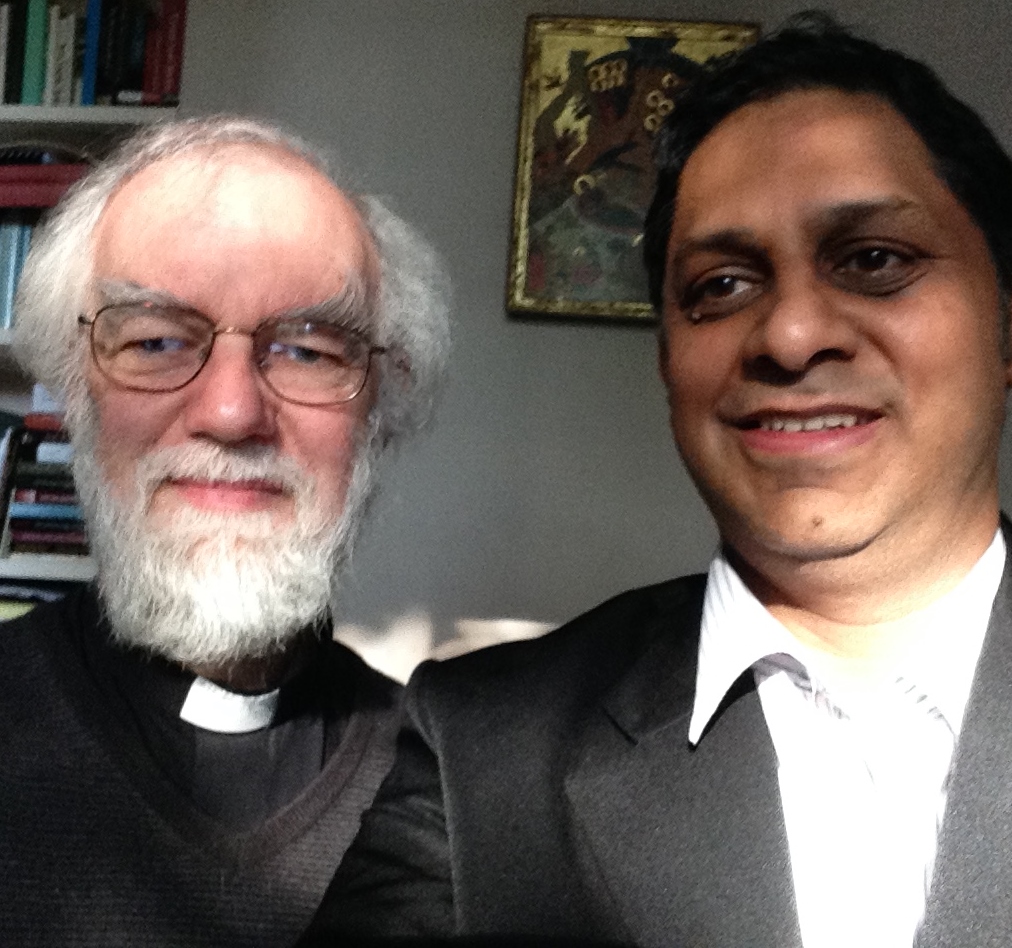
Dr. Rowan WilliamsDr. Rowan Williams, Archbishop of Canterbury (2002-2012), is currently Master of Magdalene College, University of Cambridge. Dr. Williams is a highly respected scholar, theologian, poet, translator, social commentator to name but a few of the reasons why he is held in such great regard.  

Sincere thanks to Dr. Rowan Williams for agreeing to this interview.

SPIRITUAL HUMAN INTERVIEW WITH DR. ROWAN WILLIAMS

Musa Askari: I would like to begin with a quote from your book “Faith in the Public Square” (section: Religious Diversity and Social Unity), “To be concerned about truth is at least to recognise that there are things about humanity and the world that cannot be destroyed by oppression and injustice, which no power can dismantle. The cost of giving up talking of truth is high: it means admitting that power has the last word. And ever since Plato’s Republic political thinkers have sought to avoid this conclusion, because it means there is no significance at all in the witness of someone who stands against the powers that prevail at any given time.” (Dr. Rowan Williams)

The following a quote from my late father, Professor Syed Hasan Askari, on “The Platonic Illusion“: “the directors of the October Revolution suffered from what we call the Platonic Illusion from which all ideologies, whether religious or secular have suffered, namely to create a protective state to guard what they hold as true. Plato had thought as he watched his dear Socrates being put to death, by the City of Athens, that by creating a Republic he would protect the free quest for truth, a state governed by the wise and the enlightened, under which no other Socrates would be silenced. Plato failed to notice that by the manner Socrates accepted his death he had showed how he regarded himself and his soul as indestructible, that he did not require any other means than of himself and his awareness in order to protect what he stood for.”

How significant do you sense it is for the individual, the individual witness, to avoid losing one’s individuality? In other words keeping intact an inner differentiation, guarding against collective hypnosis. Also to what extent would you agree it is problematic when those in power seek to institutionalise or “create a protective state to guard what they hold as true”?

Rowan Williams: Keeping an inner freedom is essential. We need to be aware of who it is or what it is that we are truly answerable to, rather than assuming that our final judges are those who happen to have power and influence in our immediate context. It must always be possible to ask, ‘is the majority right?’ And this is why a genuine democracy protects freedom of conviction and expression; it will encourage robust public debate and give a place to religious conviction as part of that. It will of course make decisions, but will also leave room for conscientious dissent.

Musa Askari: I would like to offer you two views on the term “spiritual” and invite your comment.

First from my interview with Professor Noam Chomsky. In an interview for The Humanist in 2007 Professor Chomsky is quoted, “When people say do you believe in God? what do they mean by it? Do I believe in some spiritual force in the world? In a way, yes. People have thoughts, emotions. If you want to call that a spiritual force, okay. But unless there’s some clarification of what we’re supposed to believe in or disbelieve in, I can’t”.

Second from my interview with Professor Tim Winter / Abdal Hakim Murad who commences his comments with, “The meaning of the category of the ‘spiritual’ has been so heavily debased by vague New Age appropriations that, although I have sometimes used it myself as a kind of shorthand, I usually find it useless. So many people tell me that they are ‘spiritual but not religious’; but have nothing to say when asked what this means, other than offering a woolly, half-finished sentence which indicates that they have experienced an emotional high in certain situations.”

What does the term “spiritual” mean to you and I would be grateful if you would offer some clarification which Professor Chomsky talks about? And is it unusual in your experience for both humanist and believer to share what appears to be a similar perspective on the term “spiritual”?

Meeting RowanRowan Williams: I rather share Tim Winter’s doubts about the word ‘spiritual’, as it is so often used simply to designate someone’s feeling of a moment’s significance without posing any questions about the nature of reality or the possibilities of change in society. I understand the word very much against the background of a Christian scriptural use which sees ‘spirit’ as that which connects us to God and one another, that which gives us relation with God and the possibility of life together in peace and justice. Hence the Christian scriptural imagery of the ‘fruits of the spirit’ – the products of God’s indwelling seen as love, joy, peace, patience and so on. To Professor Chomsky’s remarks, I’d respond by saying that the essence of belief in God as I understand it is not belief in values or imperatives but in the actual (though mysterious) presence of an immeasurable agency whose action is directed towards our life and well-being. Such a belief gives me not only assurance but also a sense of being under judgement for my failures to reflect that utterly generous orientation to the Other in my own life and actions.

Musa Askari: “This is not a journey for the feet; the feet bring us only from land to land; nor need you think of coach or ship to carry you away; all this order of things you must set aside and refuse to see: you must close the eyes and call instead upon another vision which is to be waked within you, a vision, the birthright of all, which few turn to see.” (Plotinus – The Enneads)

These words from the great mystic-philosopher Plotinus, introduced to me by my late father-teacher, have long been, along with other things, a cherished part of my spiritual life. Yet perhaps within the inner life of a believer there needs to be awareness of a kind of spiritual complacency. Would you agree to simply memorise a set of words, a prayer perhaps, or even a whole scripture, or the universal declaration of human rights appears to be not enough? How would you advise we guard against at times the familiarity of words we utter from becoming a mask over the reality of what the words are but a signpost toward, “a journey not for the feet”?

Rowan Williams: Plotinus’s words are echoed by those of the great Christian thinker Augustine (who knew Plotinus’s work) when he says that God is ‘more intimate to us than we to ourselves’. God is always nearer than we could imagine. Sometimes we need familiar words to use to remind ourselves of this – I think here of the prayerful recitation of the Names of God or the invocation of the Name of Jesus. If we are careful to punctuate our thinking and speaking with silence, words will begin to recover their original depth. We need always to be aware of our words as ‘nets let down to catch the sea.’

Musa Askari: On universal validity of mystical experience Professor Syed Hasan Askari writes, “There are some who question the universal validity of mystical experience as an expression of one universal ultimate reality. But we do not normally question the universal presence of life, beauty and love which inspire diverse forms of art, music, song and poetry. Nor do we normally question the universal presence of intellect which is the common foundation of different and conflicting theories of science and philosophy. But why is it that as soon as we refer to the universal validity of mystical experience people leap upon us from all sides insisting that mystical experience is subjective experience determined by one’s culture, theology, and personal psychological history. In every other case they seem to remain unperturbed by the co-presence of the objective and the subjective, the universal and the particular – as, for example, in regard to the human body, where there is one objective science of human anatomy and physiology upon which the entirety of medical science is based, and yet there are individual variations as to the state of health and nature of sickness. It is obvious then that the tendency to object to mystical experience’s claim of its inherent universal validity is influenced by a bias that if it is conceded, the next step would be to admit that there is a universally objective source of religious revelations. The objection is motivated by unphilosophical reasons. But it does not mean, however, that all mystical experiences are valid, and that there are no influences from the subject’s milieu and psychic constitution towards the experienced mystical state.”

I would be grateful if you could share your thoughts in response to the above quote on “mystical experience”. How has your inner life been influenced by the presence of more than one religious witness in the world? Is it easier to encounter the other socio-religiously, almost inevitable, even involuntary given the instant nature of global communications? However, to encounter our spiritual neighbour perhaps involves invoking another kinship. One laid out for example in the great mystical challenge of the Sermon on the Mount. Therefore, how do we recognise each other as not only culturally-religiously co-present, upholding all the wondrous diversity, but also spiritually mystically deeply significant to one another, transformative?

Rowan Williams: The idea of universal recognition is crucial here: we see in one another something of the same desire, the same journey, the same drawing onwards – and if we truly believe that our humanity is one at the end of the day, then this is hardly surprising. So I don’t find difficulty in learning from the spiritual explorations of those who do not share my exact convictions. Of course my prayer and understanding depend to a degree on where and who I am and what specific beliefs I hold; I’m not in favour of any attempt to construct a universal system above and beyond the particular religious traditions. But I also think that the more securely you are rooted in your own tradition, the more hospitable you will be to the deepest life in other places. You will see the other, in their otherness, as a gift to you for your growth and maturation.

Musa Askari: I would like to turn now to issues with respect to revelatory communication, the scientific age and quest for alternatives. First, some context by way of the following selection of quotes from Professor Syed Hasan Askari (Discourse on Soul, from Towards A Spiritual Humanism, 1991).

“Let us begin with those people who went through a cataclysmic experience which altered their own self-understanding and which they identified as revelation, as an experience transcending their empirical or functional self. For them, and also for those who said “Yes” to that experience and who entered in to discipleship with such people, and for those who were more reflective in their understanding, the central question was: how could the human mind or the human self become a receptacle, or a vehicle or recipient of an experience, of a revelation, of a transcendental communication – unless, between the source of communication and the recipient there is a common link. Unless there is such an ontological parity between one who communicates and one who receives, the communication will not be obtainable…….It is this problem which was at the heart of the controversy between philosophers and theologians. Izutsu, the Japanese philosopher and an expert in the semantic analysis of the Qur’an, suggests in his analysis of the Quranic discourse that unless there is an ontological parity between the two partners in communication, communication is impossible…….whether you take St. Augustine or Immanuel Kant, you have the same thrust, the same emphasis about the mystery of the human recipient…….Taking hints and clues from medieval insights based upon the edifice of knowledge we have accumulated, I am striving to formulate an alternate anthropology, a substantial alternative to Darwin, Marx and Freud. We have to ask if the anthropology we have held as sacred in modern times is the whole truth or is it not already a dogma. A dogma perhaps more dangerous than the dogmatics of the ancients and medieval peoples because, at that time at least, the conflict between theology and philosophy and between theology and mysticism was very sharp. In our times, the dogmatics of a scientific understanding of man has swept across the whole world and there appears to be no rival to it. Moreover, whoever tries to rival it is considered as either pseudo-scientific or not to be taken seriously at all. Heretics in the past enjoyed a certain prestige, and they became in posterity the great pioneers of human thought. Does the scientific age of our times allow our heretics to become future founders of thought? I am doubtful.” (Syed Hasan Askari)

I welcome your thoughts in reply to the above quotes. In particular do you support revival of the classical discourse on soul as a means to help explain not only revelatory communication between the Supremely meta-physical (Beyond Being, The One/The Good as Plotinus refers) and the material aspect of a human being but also communication between individuals in our everyday lives? That the principle of “Soul” (non-material, indivisible, invisible companion, one-many all at once) is the ontological parity. And finally what do you see as the great opportunities before us for meaningful, mutually respectful, engagement/dialogue between religion/spirituality and humanism? Can we start to talk about what Hasan Askari advocated, a move towards a Spiritual Humanism?

Rowan Williams:  Hasan Askari is absolutely correct in saying that a proper account of our relation with the Infinite God requires us to see ourselves differently. The Christian teacher Gregory of Nyssa in the fourth century CE says that if we understand that we cannot ever come to the end of understanding God, neither can we come to an end of understanding the human person. So we must always approach the human person with absolute reverence – this human individual is a reality we shall never completely contain, control, explain, reduce, and so we have an endless task before us, which is loving and serving them, not explaining them! And for religious believers, there is therefore a close connection between recognizing the infinite mystery of God and reverencing humanity properly. Lose the one and you will sooner or later lose the other. Humanism in the fullest sense requires an acknowledgement of God. A ‘soulless’ humanity, understood simply in terms of mechanical processes, does not have any obvious claim on our kindness, our service, our veneration. We may not be able to say with complete clarity what we mean by the word ‘soul’, but we know that it stands for our capacity to be in relation with God, and thus for all that belongs with our freedom and dignity.

(Many thanks to Dr. Rowan Williams for his kind permission on use of above photo)

Rowan Williams on Dostoevsky

https://youtu.be/Dsswa-CFJhs?si=0-bhSexacC9a4C73

https://youtu.be/CsCQDQHXbWw?si=sj9qQfUPE4Z7JNXR

Spiritual Humanism