Category Archives: Spiritual Humanism

Spiritual Human Interview with Antony Thomas

“Film-maker Antony Thomas has won recognition and acclaim throughout the world for his powerful and thought-provoking programmes. Born in Calcutta, Thomas was taken to South Africa when he was six years old. He moved to England in 1967, where he has written, directed and produced 40 major documentaries and dramas. He is also author of a highly-acclaimed biography Rhodes, the Race for Africa. Thomas’s films have taken the top prizes at numerous documentary festivals, including the most prestigious — the US Emmy Award, the George Foster Peabody Award, the British Academy Award and the Grierson Award for best British Documentary. Two of his documentaries, Twins – The Divided Self and Man and Animal won fourteen international awards between them.

Thomas has succeeded in creating programmes with a strong message that are also highly popular. The opening programme of his 1998 series on obesity, Fat, won three awards from the British Medical Association and was also one of the ten most popular programmes of the week in the UK, with an audience of 9.5 million. When his drama Death of a Princess was originally shown in the United States, it earned one of the highest ratings in the history of PBS, while his 2004 programmes on the Ancient Greek Olympics were sold to 83 countries.

In 2007, his documentary, The Tank Man, was invited for special screenings at the US AGM of Amnesty International and the United States Congress.

His recent work includes a two-hour documentary on The Qur’an (co-produced by Channel 4 and National Geographic) which premiered in the UK on July 14th 2008, and has subsequently been seen in 32 counties; How do you know God exists? which premiered in the UK on August 16th 2009 and For Neda, a documentary special for HBO, which tells story of Neda Agha Soltan…” (For more on the work of Antony Thomas please visit his website http://www.antonythomas.co.uk/ )

Sincere thanks to Antony Thomas for agreeing to this interview.

Musa Askari: As a documentary film-maker you have talked about having “no idea where the beginning, middle and end of the programme is”. I would like to inquire however about another “beginning”. A beginning of questions formulated through your reflections. Questions which perhaps first attract you to a project as like standing at the circumference of a dimly outlined circle with new questions coming to light during the spontaneity of filming as you traverse various radii toward the centre or heart of the piece.

Whenever you undertake a project would it be fair to say it is generally governed by a set of key questions? Also could you please talk a little about how such initial questions of inquiry are arrived at and to what extent you rely upon your instinct and intuition for guidance through the project?

Antony Thomas: Yes. It is fair to say that my work is governed by a set of questions – in some cases a single question.  “How do you know that God exists?”  “What does the Qur’an actually say?” – to mention two of my more recent films. 

What matters most to me is research in depth. “Instinct and intuition” may help to guide one to the right people and the most relevant source material, but the principle aim is to discover as many perspectives as you can on the subject you have decided to tackle, and that has to take place before any filming starts.

Musa Askari: I would like ask about your inner “experience” on the craft of editing. You have talked about there being a period of reflection before the actual editing commences. That “something very strange happens” and eventually the “whole thing seems to fall in to place”. This I find fascinating and grateful if you could share some insights on the experience of “something strange” and the recognition of things falling in to place.

Antony Thomas: We need to distinguish between the two types of programme I’ve been involved on – pure documentary and docudrama.  In the case of the latter, one is following a script.  It’s an inflexible form; the beginning, middle and end are known before you start filming. 

I would never approach “pure documentary” in the same way, because of the danger that one might (consciously or unconsciously) manipulate what is happening in front of the camera so that it fits into the preordained plan.   The decision to film a particular scene or to interview a particular individual should be based on the conviction that they are relevant to the story you are telling, but there are times when the whole experience turns out to be very different from what was anticipated, and one must always be true to that.  

After the filming is over, I generally spend a couple of weeks looking through all the material that we’ve shot, and it’s quite extraordinary how clearly the structure starts to emerge – and, of course, it’s a structure based on the truth and not on some pre-ordained plan.

Musa Askari: “Withdraw into yourself and look. And if you do not find yourself beautiful yet, act as does the creator of a statue that is to be made beautiful: he cuts away here, he smoothes there, he makes this line lighter, this other purer, until a lovely face has grown upon his work.” Plotinus (The Enneads: 1.6.9) 

Plotinus, the father of Neo-Platonism, the mystic-philosopher whose work is soul through and soul, is talking about sculpting as a reference to inner self mastery, a spiritual endeavour. There is on the one hand a sculptor seeking to bring forth a material expression of beauty, and on the other hand a documentary film-maker, in my view, also seeking beauty, perhaps a beauty non-material, not of marble, stone or wood. But rather beauty to be found through heartfelt testimonies of people interviewed, of ideas expressed. In other words a quest for “truth” at the heart of the issue being investigated is a beautiful quest. That “truth” in essence is beautiful but also enlightening, liberating and awakening.

As a principle would you agree that sculptor and film-maker have a common bond in the pursuit of “Beauty”? And in general to what extent would you consider editing akin to the art of sculpting?

Antony Thomas: I have to be very frank about this.  I don’t think I’ve ever spoken to a sculptor, or seen a sculptor at work, so I’m not really equipped to answer that question.

Musa Askari: Through your work on “Death of a Princess” (1980), “The Tank Man” (2006) and most recently “For Neda” (2010) these appear to be, apart from the social and political context, powerful representations of individual lives. In your opening sequence to “The Tank Man” for example we are presented with images on the vastness of Tiananmen Square and you comment about “treeless spaces” and “monumental buildings“. As we survey these images of the square your narration talks about, “the insignificance of the individual before the might of the state.”

Could you please talk a little on what you find compelling about individual lives which are caught up within great currents of society and state?

Antony Thomas: As you know, most of my documentaries have strong political or religious themes, but I am not the slightest bit interested in theory and dogma.  What matters to me are the practical outcomes. I want to the viewer to feel what it’s really like to be living under this or that system.  I don’t want to be up there on podium listening to the Head of State or the Pope, I want to be down on the ground floor of ordinary human experience.   

The reviews that make me happiest are those that suggest that this method is working, like this one, in response to a documentary I made in Egypt some time ago:  “I have seen many documentaries telling me what it was like to be in Egypt, yet this was the first one to spell out, both beautifully and brutally, what it felt like to be an Egyptian.” 

https://youtu.be/fHMZmthg-Vk

Musa Askari: I find the liberating power of the individual no better expressed in your work than in “The Tank Man”. A lone man standing in the middle of a boulevard, straight, still and defiant. No weapon, just his individuality. It is seems remarkable to me with so much violence having taken place already, so many individual un-armed lives already brutalised the night before on June 4th 1989, why the driver of the lead tank halted at all. What transpired between those two as they stared at each other we may never know. As we witness the bravery of one man standing before the lead tank, an image which has become an icon of freedom, we are also witnessing the actions of another man who is hidden from view. Namely, the driver of the lead tank. Enfolded within the machinery of military power, represented by a tank, the individual is not only insignificant (recalling your quote earlier) but also absent. Yet here in this event, in this image, the individual is unmasked for all to see in the clear light of a noon sun confronting symbolically a state power and in doing so invites the driver of the lead tank, for a few minutes, to become an individual also.

Would you agree perhaps there were two “Tank Men” that day in Tiananmen Square? And I would be grateful for your thoughts on when you first saw the footage of this anonymous individual making a brave and selfless stand.

Antony Thomas: Yes. I certainly remember the powerful emotions I felt when I first saw that image of a young man, standing in front of that column of tanks, and I completely agree with the point you make.  There were two heroes that day – one unseen inside the lead tank, and one standing in the road with his back to us.  I’m afraid it’s likely that both of them shared the same fate.

Musa Askari: I note your interest in religion, through works such as “Thy Kingdom Come” (1987), “The Quran” (2008) and more recently “How Do You Know That God Exists?” (2009), and present the following quotes from my late father whose work and reputation I understand you are familiar with.

“The prospect of a religion reflecting the Absolute absolutely would turn that religion into the most dogmatic and oppressive belief system imaginable. Hence, there should be room between the religions for mutual critique and complementarity. In turn, this should generate a religious need for religious plurality and diversity.” (Professor Syed Hasan Askari: From Interreligious Dialogue to Spiritual Humanism https://spiritualhuman.co.uk/2011/03/14/from-interreligious-dialogue-to-spiritual-humanism/

“It was Brumana consultation in 1972 in Beirut the biggest Christian – Muslim consultation of the century, that in my paper I made it absolutely clear that perhaps, perhaps we need more than one religion. How could one dare to equate the Almighty Unity and Transcendence and Mystery with the form of one faith and practice?” (Professor Syed Hasan Askari: speech on Spiritual Humanism, 1995 https://spiritualhuman.wordpress.com/speech-hasan-askari-spiritual-humanism/

Through your work, research and study of religion could you please talk about your observations when an exclusive one-sided approach to religious witness is taken at the expense of the universal and inclusive? And to what extent do you think the direction of inter-religious dialogue has changed or stayed the same since your interest in religion and inter-faith began?

Antony Thomas: I agree with every word that you have quoted from your father’s writings. The tension and violence, not only between people of different faiths, but between co-religionists is one of the greatest tragedies of our time.   

I know many wonderful people who are trying to reach out across these divisions, but in spite of all their efforts, it seems to me that the problem is more serious now that at any other time in my life.

“Reflections on the Prayer of St Francis of Assisi” by Musa Askari

“Reflections on the Prayer of St Francis of Assisi” by Musa Askari

“Lord, make me an instrument of your peace.
Where there is hatred, let me sow love;
where there is injury,pardon;
where there is doubt, faith;
where there is despair, hope;
where there is darkness, light;
and where there is sadness, joy.

O Divine Master, grant that I may not so much seek
to be consoled as to console;
to be understood as to understand;
to be loved as to love.
For it is in giving that we receive;
it is in pardoning that we are pardoned;
and it is in dying that we are born to eternal life. Amen”

It was my late father, Syed Hasan Askari, who introduced me to the prayer of St Francis many years ago. My introduction came in the form of hearing it read aloud. Perhaps to come to a new prayer not by reading it first but by hearing it one is somehow  able to let the prayer rest more gently upon one’s soul. Especially if hearing it read by a person one trusts. Therefore, prayer may also be understood not only as a sign of devotion but also trust between seekers of truth and greater still a sign of Trust in a Higher Power to which the prayer is directed.  

To hear such words of love and devotion for the first time resonated very deeply. In the years to follow the prayer would become one among many of my constant sources of inner support. I would not only read it in silence or remember it during the course of a day but moreso I would make a point of reciting it by whispering it to myself at some late hour of the night. Through this whispering recital the prayer became more real, an experience, not only of emotional support but far beyond that to moments of  experiencing the prayer as a form of being itself. That it almost had a life of its own. A life in which I was hoping to participate if only momentarily due to varying levels of inner intention and alterness.

Over and above the actual form, order and beauty of the words it is worth exploring, if only superficially through this reflection, the manner in which the prayer is working upon our inner being. What is its outer effect and what is its inner influence? What kind of inner preparation is required to utter such words as authentically as possible? If one is an “instrument” it begs the question who is the invisible artist and what is the melody that is being played? In what way, if at all, do the first and second verses talk to one another? Does a prayer stop when we have finished uttering its words of devotion and praise? Or is there a life, above our own embodied life, in which the prayer perpetually participates? Are prayers, in the form presented to us by inspired individuals who first uttered them, an echo of a far greater recital of praise and devotion that goes on above our consciousness?

Where there is an echo there must be a source from which it emanates. Where there is vibration there must be the beat of a drum. Where there is beauty there must also be the eye which recognises it as such. Where there is thought there must a thinker. And where there is a question there must be a clue or the answer complete. Is there such a question and answer present within the prayer of St. Francis? Is there any such dialogue implied between the one who prays and One to whom the prayer is directed?

At first glance perhaps not. However, if one looks more closely, at the first verse in particular, the following may be a clue where there are six question and answers present and not only that but clear intruction or remedy provided.

Take for example the line, “where there is injury,pardon”. By considering it as three lines a dialogue becomes apparent:

We ask, “Where is injury?”

The prayer answers, “There is injury”

Remedied by, “Pardon.”  

Take another line: “where there is despair, hope”: 

We ask, “Where is despair?”

The prayer answers, “There is despair”

Remedied by, “Hope.”

Is it not so that through most of our heartfelt prayers, either handed down by tradition or uttered by oursevles spontaneously, we somehow feel in “conversation” with the Supreme? It is into such a “conversation” the prayer of St Francis invites us to enter. In other words, consciously or unconsciously, the human soul is in constant “communication” with its Source. A Source from which it emanates and to which it longs to return. It is perhaps this “communication”, this greater dialogue, that the prayer somehow lifts the reciter innerly to become more conscious of. All great prayers take us in this direction. The prayer becomes a door into another kind of awareness.

Prayer, as both dialogue and a form of worship, is a most peculiar kind of dialogue. We are asking questions and we hear only our voice. A voice that may be frail and shaking, through some traumatic experience, or overjoyed with gratitude for what we have been shown or recevied. The answer to our prayers, however, is heard in silence. The Great Silence of The Supreme Presense, the First and the Last. The Hidden and the Manifest, everywhere and yet nowhere, Immanent and Transcendent. I am reminded of the following from an much earlier piece of writing of mine, “It is in such silence that the Divine Command is uttered perhaps”(The Sound of Silence, 1992) https://spiritualhuman.wordpress.com/2011/02/28/the-sound-of-silence/

In our corporeal nature we hear corporeal things. How can the physical ear hear an answer from One who is Supremly immaterial and Beyond Being? Therefore, silence and patience become the means through which our inner ear becomes more atuned and there we may wait, atentive, alert, humble and above all listening by stilling all distraction within our lives, touching the fringes of a greater peace. Hearing as it were by another mode.

In the prayer of St. Francis we have a deeply moving dynamic where not only are question and answer co-present but also the remedy or instruction to the question. The prayer consoles, reassures and embraces all at once. There is no delay in compassion. The remedies of love, pardoning, hope, faith, light and joy are instantly provided as soon as the question and answer are complete. Infact, the prayer does not wait to be asked how one corrects the disorder within and without. It rushes the remedy towards us faster than we inhale our next breath. Life before life.

One may choose simply to reflect or meditate upon only one line of the prayer and be moved beyond measure. The question, “where is despair?” may be asked outwardly addressing the world and we are presented with images of oppression between human beings or come across testimonies of those who continue to suffer and through such images and accounts we are told innerly, “look! there is despair”. All one need do is ask the question wholeheartedly, compassionately and sadly too many answers come flooding to our consciousness of lives lived in despair. The prayer challenges to ask and notice the other and by doing so abolish otherness from our being. One need not look far to see despair if one chooses not to walk by on the other side. On the other hand the same question maybe asked about oneself to oneself, “where is despair?”. Here personal courage is needed, for now we are looking into the face of our lives and should we be able to peer with unwavering inner strenth the answer comes, “there is despair”, directing us to some long forgotten memory or unravelling chains of thought which enslave and cripple us mentally, distancing us from the world and from ourselves.

To both outward and inwardly directed questions on despair the answer is the same, “hope”. In other words, do not despair, there is hope. The very question itself is “hope”. The question carrying within itself its own liberating power. The question is hope “embodied” as a thought. The question cannot come from an abyss of utter want or lack, the question must carry with it the source which sent it on its way. As referred to previously; the prayer consoles, reassures and embraces all at once. It can only do so if it is enveloped by an inspired inspiration. In the outer form of one line, the question and answer go hand and hand, as like two hands coming together in prayer.

Further, the first verse gives us another insight. It offers a definition of “peace”. Of what “peace” means when commencng a recital of the prayer. Here peace is to love. It is also to pardon, to have faith which implies to trust, to be hopeful for the Light of the One to whom the prayer is addressed is neverfailing and our overriding inner state of such peace in that moment is to be joyful.

The prayer of St. Francis begins in the name of peace and that is perhaps why it has survived to this day and recited by so many. The human heart in perpetual quest for peace. If humanity’s “humanity” is to mean anything it must surely begin with peace regardless of it being called sacred or secular. The Russell – Einstein Manifesto (1955) sums it up beautifully, “We appeal as human beings to human beings: Remember your humanity, and forget the rest.”

Would that those who wage war in the name of “peace” remember such qualities of peace as offered by St. Francis. Would that they pause and re-think in “silence” if they truly are bringing peace or the oppositie of peace which the prayer of St. Francis does not shy away from making clear. Namely, hatred, injury, doubt, despair, darkness and sadness.

In my view the first verse is where the inner work is to be done. The first verse prepares the inner ground, turns the soil, so that we may “sow” such seeds as love and hope. Thus making the earth of our being a fertile ground from which may spring, over the ocean of our consciousness, all that the second verse leads us toward. The second verse finally frees us from enslavement to our ego-bound mindlessness. Of collective hypnosis from our exclusive one-sided attitudes to identities of race, ethnicity, culture, creed and ideology (religious or humanist).

We are in a totally new frame not only of mind but consciousness when proceeding through the second verse line by line. When the first verse has “consoled” us, “understood” and “loved” us like a kind friend or beloved. When it has enriched and pardoned us our failings. When we have been transformed within and without through the power of the first verse then, and only then, we may truly mean the words which pass by our lips of surrender from the second verse. We ask nothing for ourselves when we have been given more than could have been asked for. Now, one may recall how the prayer began, “Lord, make me an instrument of your peace”.

Through the discourse on soul we are told body is the instrument of soul, the material is later to the immaterial. Yet, it is not the body which seems to be the “instrument” implied when we notice how the prayer ends, “it is in dying that we are born to eternal life.” What other could it be that perishes, passes away, than body? And what other than soul could we speak of when we speak of life eternal? It is soul that has the right to eternal life. Only soul un-embodied remains immortal. Soul, impartible, invisible, indivisible, non-material companion of our self, both one and many at the same time.

The higher levels of the beautfiul prayer of St. Francis may only be reached when perhaps we consider the prayer to a prayer of the soul. An echo of a greater prayer that continues above our consciousness. What the words of that greater recital may be, only as souls shall we come to know. Soul, here and now.  Peaceful greetings to the soul of St. Francis of Assisi.

I conclude this brief reflection with the words of my teacher:

“Pray that you are granted an unbroken awareness of your higher soul, that which is the authentic principle of your being, that un-embodied, immortal, all pervading reality, which is one and entire everywhere, every time; that which is in perpetual contemplation of the Divinity above it, that which remains separate, apart, above all you do, relate, experience and suffer as a…body here. Remember it, for it is the true source of your peace and power. Remember.” (Hasan Askari, “Pray” from his book “Alone to Alone”)

Originally published as guest article http://soul-licious.com/?p=918 Thank you to Mia Caruso for asking me to write about the Prayer of St Francis.

See also: Prayer for my Parents & O Light of Lights

“The Eternal One” by Lee & Steven Hager

“The Eternal One” by Lee & Steven Hager 

reflection on the work of Hasan Askari

We didn’t have the privilege of meeting Hasan Askari while he walked
this earth, but we have come to know him through his son Musa, and his
abiding spirit that continues to live through his words. As Hasan
himself said, “A book written by a sage is like the residence in which
he still lives.”
We felt especially drawn to Hasan because he was

among those rare seekers who looked both within and then is also able
to look without. He recognized, “Before we ask about the other out
there, we should ask about the other in us, our nobler and loftier
neighbor and companion, Soul.”
But instead of becoming caught up

solely within his personal inner explorations as many do, Hasan turned
his attention to the problems that fill our world. His work speaks of
his heartfelt desire to help others look past the outward religious
dissimilarities that separate us and instead discover the great truths
that unite us all at the core.
 
Enlightenment can be described as an inner awakening that allows us to
see past the illusion of separate forms and realize the Oneness of All
That Is. Hasan wrote, “The life which is multiple and diverse at the
human end is One at the Divine end.”
He was not the first person to

awaken to this truth, and he won’t be the last, but it was extremely
important to him that we all see beyond our humanity and make a
connection at the level of the soul. Hasan recognized that while
religion has often been a huge bone of contention, it can also become
a tool for unity when we understand that all souls are united by the
same eternal truths, and those seeds of truth can be found within
religion when we look past the surface.
 
In the introduction of his translation of “Solomon’s Ring: The Life
and Teachings of a Sufi Master,” Hasan said, “I was looking for a
language which could make dialogue possible and mutually enriching
between people of different religious traditions. I was already free
from sectarian and religious dogmatism…Real speech was for me a
linking of soul with soul.”
Hasan found that language when he

discovered the distinction between belief and faith. He wrote, “While
belief is a part of the cumulative tradition, faith is the personal
immediate possession of each individual by which one relates to one’s
life…faith is thus an inner ability to relate and communicate without
fear”

So much of the world’s self-imposed misery could be avoided if
humanity embraced that understanding. As Hasan recognized, we often
mistakenly cling to the trappings of religion, much as we cling to the
outer trappings and traditions of our national origins, because we
mistakenly believe they define us. In doing so, we fail to ask
ourselves how something that is essentially non-material (the Self or
soul) could be defined by something associated with the material. We
become militant in their defense because we fear being swallowed up
and lost, but as Hasan pointed out, “Love is the harmony into which
all contradictions resolve.”
Love is the glue that holds us in

oneness, but we cannot see it when we’re tied to outward appearance.
But if we dug up several different types of trees and looked only at
the roots, we would find that it’s very difficult to tell them apart.
 
However, as Hasan recognized, opening ourselves to others requires
courage. Hasan’s son Musa relates that we must first recognize that
the ‘other’ is not truly ‘other,’ but “someone from whom one can
learn; that their experience has something deeply meaningful to
offer.” We find this a frightening prospect because, as Musa points
out, we “run the risk of being transformed positively by the witness
and testimony of the other.” Our first challenge, if we wish to see
positive changes in our world, is to stop seeing anyone else as
‘other’ and embrace Oneness.
 
We are surely at a critical time in man’s history. Certainly human
beings have always been at odds, but we have never before had the
capability of ending our arguments by obliterating life as we know it.
If there was ever a time to heed the words of visionaries and
peacemakers like Hasan Askari, it is now. Our differences have not
given us anything of value, our oneness can.
 
Where there is no other, there is no fear. To the extent this
awareness is obscured, fear will rise in the same degree
—Hasan Askari 

____________

Lee & Steven Hager, the authors of “The Beginning of Fearlessness: Quantum Prodigal Son.” Writing about themselves, “We’re just like you. We have no special qualifications, but after years of struggle, we discovered the key to living a life of fearlessness. If we could, you can too.” Please continue reading more about Lee & Steven and their unique journey of living a life of “fearlessness” http://www.thebeginningoffearlessness.com/

See earlier article on this blog by Lee & Steven “That’s Good” https://spiritualhuman.wordpress.com/2011/09/05/thats-good-by-lee-steven-hager/

“Four Breaths” by Hasan Askari

FOUR BREATHS

by Hasan Askari

(Alone to Alone: From Awareness to Vision)

One may concentrate on an idea that connects oneself to the whole of the cosmos and which heightens and deepens one’s self, and at the same time start gently and wholeheartedly breathing within. Which is so important and effective, idea or breathing in, depends upon one’s crucial choice in attention. By accompanying the act of inhaling with attention one touches the fringe of the life of the idea, its universal power and joy.

First however is the breath of purification, of burning away all that is dense and hard, all that is alien.

Second is the breath of returning from the outer limits, from the six directions of front and behind, right and left, above and below, it is a breath of returning to the seventh point, the centre within.

The centre is also the sphere; as a centre it is eternity, and as a sphere it is infinity.

Third is the breath of ascent to one’s archetype remembering that one’s form here below is an image.

The archetype is both the Self and the Cosmos, after the analogy of centre and sphere.

Fourth is the breath of adoration at the appearance of vision before the innerly directed eye, before the thought in rest, stable and gentle.

This discourse has nothing to do with one’s physical and psychological well-being. If one feels physically and psychologically healthy, that is a very minor reward. The relation of the exercise to the life of this world consists in ingathering the positive and helpful forces. The rest, its greater part, lies above consciousness, above the imaging faculty.

However, valuable, whatever be the authority on which they rest, all techniques of self-development in their elaborate rules and details, without the simplicity and willingness to surrender before the Great Work that goes on above our knowledge, are a burden keeping the novice under one illusion after another.

Pay attention to the idea, and hold it invisibly, its wonder and beauty hidden from one’s ordinary sight. Remember how one sows the seed, and hides it, and waits in trust.

Let Forgotten Memories Unfurl by Musa Askari

What is the moment?

When buds turn to flower

When clouds release a shower

When winter releases from its heart spring

Do you ever wonder at such things? 

Have you ever wondered

Why you are here?

And cried a silent secret tear

Have you ever wondered

From where did you begin?

Which mother’s milk did you abandon never tasting? 

Even though you may be trapped and bound

By this world that has let you down

Where are those first footprints to be found? 

Look not for them

In your earliest childhood days of this world

Continue Beyond

Let forgotten memories unfurl.

It was in March 1993 I put together the words as above. I was in my early twenties. It was a time of continued inner expansion. Many things were becoming clear on the direction my life may take. I was not only reading Plotinus (The Enneads) but also hearing my father, Hasan Askari, talk about the great mystic-philosopher, considered the father of Neo-Platonism, who is Soul through and through. I returned again and again to my father’s book “Alone to Alone” which had been published a few years earlier and new meanings came to light. The expansion I refer to was centred about one word, “Soul”: that impartible, invisible, indivisible companion of our self, both one and many at the same time. 

I learned of Plotinus’s term for the Supreme, The One – The Good. I heard about his system which referred to “emanation”. That from The One, who is above all association, emanates The Intellectual Principle, from which comes The Universal Soul and then The Individual Soul. I heard about such terms as conjoint; association of Soul with Body, with Matter. One of the most beautiful things I recall, ever-fresh, was hearing Hasan speak of Plato; that it is not the Soul in Body, but rather it is the Body in Soul. This had a transforming effect upon my thinking, upon my spirituality. It resolved many issues on the relationship between Body and Soul. It opened new doors. And still we had not come yet to ourselves; all this was Soul entire, Soul un-embodied.

It is important I explain a little what I mean by “direction”. I do not mean any worldly direction of occupation or career, of planning one’s life academically or anything of that nature. “Direction” was for me an inner movement which would dictate the outer movements.  I was already a student of my father’s work for many years. The beauty about his manner of teaching lay in that it was never forced. It was simply presented. We engaged in discussion deeply, or I observed him in dialogue with others. I observed him all on his own. And despite many serious challenges in life I witnessed an unfailing dedication to both his work and his inner self-mastery, which was one and the same. It was at moments observing a great artist at work, sculpting, painting or reflecting. 

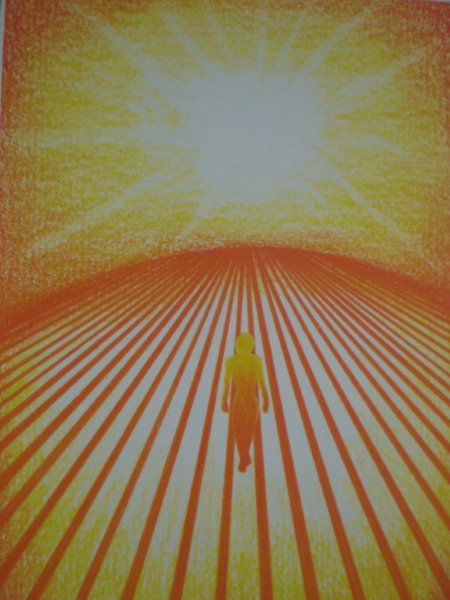
To see his face light up at the dawn of some new idea or unravelling of some mystery was for me like watching a sun rise above the *horizon. The faint advancing light that ushers in the arrival of the actual Sunrise. Ideas used to dawn upon him wherever and whatever he was doing. Either in conversation-encounter with others or all alone sitting in silence. Observing him I was certain of one thing, his mind was never far from the remembrance and praise of God.  One of the greatest lessons I was taught by him was to seek the company of solitude. To seek out time for oneself during the course of the day, to think and reflect, to be still, to pray, to remember The Supreme. It was as if one could spend an entire life time in that silence. The days could have come and gone, the seasons passing as like rushing clouds overhead. The sun could have risen and set countless times, one would never have known. 

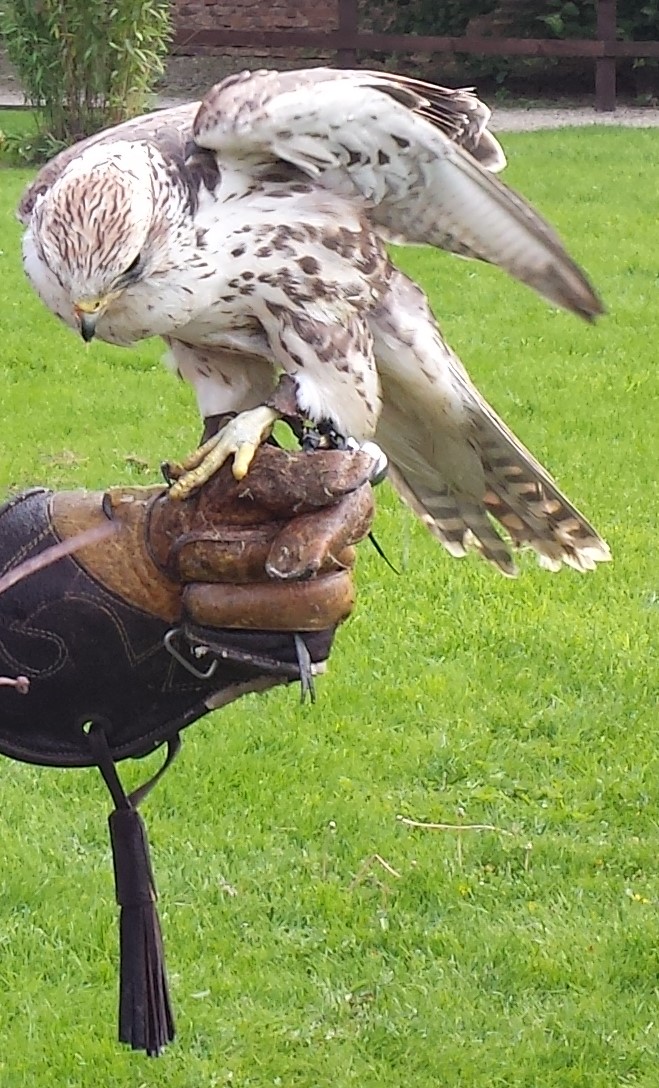
Falcon

I developed the habit early on of waking up and being alone in silence with solitude. It was at one such moment I reached for pen paper and the poem “let forgotten memories unfurl” came about. A thought came to me. I put down the first two lines and it went from there. Ideas, images and ideas behind those images were my torch bearers, they guided me and I followed. Within those moments of the night I was seeking some understanding of soul, something, anything. To move from the discursive to the intuitive and spiritual. To lift the words of my teacher from the page and carry them upon my head as an offering for my Soul to pluck me on flight to some deeper understanding. As like an eagle or falcon plucks some morsel of food not forgetting to return to the “Hand” that released it. Talking and hearing about Soul from Hasan I came to notice the world about me more, the physical world, nature for example.

I reflected on the simple beauty of nature and started contemplating another moment within nature. One moment and yet a multitude of moments. The moment when a bud decides to flower, clouds releasing their shower. It was not that I was seeking an exact temporal timeline, that was not the goal. The goal became to ponder and reflect. To imagine oneself just being present at the very moment one particular bud decided to begin its flowering. It was as if the act of observing and flowering were one act but in different forms. To imagine that which called forth the bud to flower was the same which called one to notice it. Symbolically, one of the ways a flowering bud may be understood is akin to our eyes opening from a deep sleep.

The beauty of a bud is further increased when its petals have opened fully, reaching for the sun much like our own physical eyes more beautiful once open and light hits the optic nerve. Can one bear witness to any physical eye being beautiful in the dark? Whilst closed the beauty of our eyes is concealed, but would we deny, even when closed, that the very “Idea” of an eye is a beautiful thing. An “Idea” of beauty by which other beauties are seen, a hierarchy of Beauty, of Ideal Forms, intangible and immaterial. Now we may invoke the adage, “the eyes are the windows to the Soul”. Sometimes both acts, flowering and observing, are mirrors and the original is out of sight, at others one is the mirror and the other is the original standing before it.  It all depends at which point within the hierarchy one is “standing” as Soul. 

There also comes a point to turn the arrow of inquiry from nature to oneself, from outer to inner. To ask deeply, with meaning, with tears, with a yearning like never before, “why am I here?” Again it was not any conclusive answer I was searching. I was not seeking to unveil some crystal ball and peer in to it becoming so disoriented whereby I lost sight of the very thing that brought me to ponder the question. The power was in the question itself. The question was the guide and that I tried to keep intact. 

In coming back to Soul, on this poem, another idea came to me. Namely, above our memory, a timeline from birth to the present moment. Above all the experiences, all relationships, above all these memories, tragic and joyous, above even our dreams, there is another memory. A more Ancient Memory, that of Soul. Embedded within that memory is a “Call”, a Command almost. A beckoning for the Soul to turn its gaze from looking down at what it has created, forgetting its priors and thus forgetting its own inner memory. A “Call” to become free of being infatuated by its own beauty and seek the home of that Light which shines within it. The Home of Beauty, that from which Beauty emanates.  To look up, as it were, to its Source. Within the Islamic tradition there is a beautiful way of recalling this memory when The Quran reminds, “We are of God and unto God we return”. In other words one’s Soul is from God and unto God it returns. Quoting Hasan Askari from his 1995 speech on Spiritual Humanism, “our journey ultimately is from soul to God. Pure is your soul, purer is your approach to God”. https://spiritualhuman.wordpress.com/speech-hasan-askari-spiritual-humanism/  

We already accept there is a memory in to which we are born. A memory we have no knowledge of as we are born. It is a memory presented to us as integral to our worldly identity, a pseudo-identity I would say, a garment, a covering.  Memory upon memory which over time distances us from a far more Ancient Memory within the Soul having the potential to distance us from one another. Namely, in general terms, our collective identities of race, ethnicity, nationality, gender, culture, language and religion.  Within these collective memories there are indeed gems, hints, clues, great insights, much meaning. However, it depends on how such socio-historic memories are relayed to us. As complete and absolute or temporary and symbolic.  

If we can accept, by example of such collective identities, the principle of a “memory” before our knowing of it, before our birth, then perhaps we may begin to explore another Memory above the ones presented to us here through our individual-collective lives and histories. Through story and art, through encounter and co-presence. Through Soul! Upon meeting another let us pay attention to their story for who knows what buds are beginning to flower and what forgotten memories are beginning to unfurl for both the speaker and listener.  

Originally published in “The Beginning of Fearlessness” c/o Lee & Steven Hager 

Further reading: Plotinus, The Enneads (The Knowing Hypostases): “If the Soul is questioned as to the nature of that Intellectual Principle – the perfect and all-embracing, the primal self-knower – it has but to enter into that Principle, or to sink all its activity into that, and at once it shows itself to be in effective possession of those priors whose memory it never lost: thus, as an image of the Intellectual-Principle, it can make itself the medium by which to attain some vision of it; it draws upon that within itself which is most closely resemblant, as far as resemblance is possible between divine Intellect and any phase of the Soul.”

Further reading: Plotinus, The Enneads (Love): There are souls to whom earthly beauty is a leading to the memory of that in the higher realm and these love the earthly life as an image; those that have not attained to this memory do not understand what is happening within them, and take the image for the reality.”

* ( … as the eye waits on the rising of the sun, which in its own time appears above the horizon – out of the ocean, as the poets say – and gives itself to our sight” Plotinus)

Inter-Religious Dialogue : An Encounter by Musa Askari

Below Musa Askari’s article for HeadWaters/Delta Interfaith

http://blog.headwatersdelta.org/2011/05/inter-religious-dialogue-encounter.html

To engage in inter-religious dialogue is a tremendous moment of encounter. An encounter primarily between individuals. A great challenge at the same time. For to enter dialogue is to run the risk of being transformed positively by the witness and testimony of the other. It is this challenge which at the same time holds great reward for those who partake in dialogue wholeheartedly as individuals and not simply as individual representations of a collective identity.

Here lies the first challenge to see the other as someone from whom one can learn; that their experience has something deeply meaningful to offer. Sadly, many fall at the first hurdle. The individual is missed and we are left with only a shell, an appearance of dialogue, where inter-religious dialogue is seen as the destination and not as one of many starting points to spiritual quest. Which maybe is why some remain disillusioned that the promise of dialogue did not bear more fruit after initial discussion sessions.

For purposes of context crucial we state a distinction between the term “inter-religion” and inter-religious dialogue. They are not one and the same. “For centuries this inter-religious consciousness was suppressed, the only way to redeem it is to clearly and whole-heartedly acknowledge the reality and necessity of multi-religion….inter-religious dialogue is one of the many ways in which inter-religion becomes a conscious process.” (Hasan Askari, from Inter-Religion, 1977)

If inter-religious dialogue is only about acquiring knowledge about the faith of one’s spiritual neighbour then it is not “dialogue”. It is a study of religion and there are many ways to acquire this socio-historic knowledge outside of a dialogue meetings. That cannot be the goal of dialogue. If it is then it is a secondary not a primary goal. The goal at its core surely must be of encounter, to bear co-witness leading to mutual mission.

Should inter-religious dialogue remain an institutional formality then I fear it may never rise to fulfill its promise of deep and meaningful engagement between peoples of diverse faiths and backgrounds. It is as individuals we dialogue not as collective identities. To arrive at such a door of dialogue presupposes some deep sense of inquiry about the very fact of a multi-religious world. A knocking upon an inner door followed by entry in to dialogue which is both with the other and within oneself. Both individuals become doors for each other’s entry in to a moment of “presence” before one another. A presence that is both independent of them and also within them.

To partake of inter-religious dialogue is to ask the question, consciously or not, “Why do we have more than one religion upon our planet?”(Hasan Askari).Thus to engage in inter-religious dialogue is also to peer in to the very obvious phenomenon of more than one religious and spiritual witness. It is a call to abolish exclusivity and one-sidedness, first and foremost within the mind of the individual. To break free of the grip of collective hypnosis; that one’s own tradition alone holds the truth exclusively:

“Perhaps we need more than one religion. How could the mystery of the Transcendent Reality be equated with the form of one faith and practice, or with one state or sign of a given religious experience! That there was something essentially desirable and positive about the very existence of more than one religion. Accepting multi religion as a theological necessity, almost a blessing. Religious diversity was thus a school of true humility and patience”. (Hasan Askari: Spiritual Quest – An Inter Religious Dimension)

My own journey spiritually, which includes a deep appreciation for inter-religious dialogue, began at the hand of my teacher and friend, my late father Professor Hasan Askari (1932-2008) https://spiritualhuman.wordpress.com/hasan-askari/. From a young age I was immersed in the work of who many regard as one of the pioneers of inter-religious dialogue. At first it was a curiosity to know more about the work of a father before me but later it became, through love, a life’s endeavour and remains so. Religious diversity has always been a part of my life. Looking back I was fortunate in other ways too by having a childhood in both India and England. The spiritual diversity which was overtly a part of my life in India continued in England. However, it continued in a more subtle manner but nonetheless significant.

I came to accept, very early on, religious diversity as a sign of deep inquiry rather than something to confront. Furthermore, I came to accept it was not enough for me to be simply curious about the variety of religious practices, rites and rituals, but to move on from that understanding and integrate it in to my spiritual life, an inner life. I was interested in the individual before me as much as I was interested in my own individuality.

Spiritually I needed the presence of the other to help me consider the mystery of religious diversity. Without the other, who bears no outward resemblance to one’s collective history, to the faith in to which one is born, without the other there is no diversity. Without diversity there remains no self-limiting principle within the life of humanity to remind us of the dangers in making the most exclusive and one-sided claims to truth and finality.

I was not interested in pseudo dialogue. I was interested in not only what the other before me had to say of their faith but more so interested in a “sentiment” which can be shared despite outward differences. I was interested in a most ancient and beautiful term, the essence of one’s being, namely soul (atma/psyche/ruh).Overtime I realised that unless one is prepared to stand apart from exclusive truth claims, from the baggage of collective identity, breaking free from the weight of collective burden that one was somehow responsible for the entire collective faith of one’s tradition, one would never meet the individual in dialogue. There would always remain a hesitation to engage fully. There would be no dialogue let alone encounter only a repetition of well known themes and objections ending in not dialogue but monologue. There would be neither sentiment nor the rising to a moment of being present to one another in co-witness.

Is inter-religious dialogue failing? Is it yet to deliver on its promise? It maybe too early to say despite the great efforts made over the previous four to five decades. For example, from Ajaltoun consultation to Lebanon and Broumana in Colombo, Europe and the United States. From those early days of commitment inter-religious dialogue has now become a global phenomenon which must be regarded as some measure of success. Today we have the “Common Word” initiative – Love of God and Love of Neighbour. In the end as in the beginning the common word for me literally and spiritually is simply “Life”. To ponder this mighty question of “Life” spiritually one cannot help but stumble upon soul as the principle of “Life”. Perhaps, just perhaps, what is missing from inter-religious dialogue may be met by reviving the classical discourse on soul.

Towards Unity

from ”Alone to Alone” by Hasan Askari (1932-2008) published 1991

The very idea of unity is a step towards self unification, towards unity of all that is, which carries within its simplicity the secrets of universal communication and sympathy.

The path that opens up towards self unification leads also to intuitive and revelatory experiences bringing along with them a transparency and a power, a knowledge which results from the abolition of all dichotomies: subject and object, I and you, here and there, now and then, inner and outer, far and near.

The world is then seen as a reflection of multiple dimensions, domains, presences. A great unrest may follow. One may require a guide at this stage.

Time is then multiplied moving, as though, in a circle. The difference between eternal recurrence and eternal “now” might disappear. Great confusion may set in. One prays now for grace.

A power unknown in its might and scope is brought near, a power all the time within us and before us, and yet hidden, the power of the unembodied over the body, of control and direction without physical means, so sacred that it calls for humility and renunciation of all power.

Those who practice patience wait in trust, and those who cannot contain what they have known and seen go mad. Those who combine both the states are the dervishes who whirl with ease and intensity around an invisible axis. Their secret is hidden.

BABA NIZAMUDDIN! BABA NIZAMUDDIN!

By Syed Hasan Askari from his book “Alone to Alone”

“It was winter. What is winter, she used to ask, and what could one say about it. It is sheer negation, a moving away from the sources of warmth.

North East India. The middle of the thirteenth century. A period of widespread upheaval and powerful manifestations. A century of the rise of Ghengiz Khan and the Mongol Hordes, and also a time shared by such great mystics as Francis of Assisi and ‘Attar of Nishapur, Ibn ‘Arabi and Mere Angelique, Rumi and Dogen.

A small town on the Gangetic plain. A mother and a child in a room without wood, without coal, without any means, without proper clothes, without adequate blankets for the cold season.

It was winter. There was poverty.

What is winter, she used to ask, and what could one say about it. It is a returning to one’s own self, to another fire and warmth, a compelling invitation to rethink our humanity.

Mother and child. There was an air of gratitude about them, between them.

She did not look at winter. She looked at one of the faces of God. The child looked at the face of his mother.

It was winter. It was also a Word from Him, she used to say to herself, and her face used to glow as if she were facing the sun on a warm summer day.

There was poverty. She was one of those few who knew that particularly in poverty God’s providence was beyond measure.

Nizamuddin Auliya was one of the well-known Sufi masters of India. He passed away in 1325. A contemporary of Dante, Amir Khusru, Eckhart, Bu Ali Shah Qalandar, Muso Kokushi and Haji Bekuash. Nizamuddin’s shrine is in Delhi, and has been a source of inspiration, over all these centuries, both for the seekers and the pilgrims.

When Nizamuddin was asked how and when it was that he first experienced the spark of divine love within himself, he said: First the spark of trust lights the lamp of joy, and then we discover that we are in the mansion of His Love. Then he recalled his childhood: It was a long time ago. My father passed away when I was a small child. My mother had no means of her own. Sometimes we used to get up in the mornings during winter to discover that there was nothing in the house, not even a piece of wood or coal to boil water. It was on one of those mornings that my mother used to come up to me while I was still all huddled up in some sort of blanket with lots of patches and holes, and say to me: “Wake up!” Then, after a pause, I used to hear, amidst all that poverty when we had nothing in our house, not even a loaf of bread, my mother saying to me:

“Baba Nizamuddin! Wake up! We are guests on this day in the House of God!”.  And she used to glow with joy, and her hands were warm while she lifted me and held me in her arms. It was my mother who initiated me upon the path of trust and joy, who liberated me once for all from the slavery to the seasons and the conditions of this world.”

The Grand Canyon

By Hasan Askari from his book “Alone to Alone – From Awareness to Vision”

As he stood before the Grand Canyon, he was told by one of the guides that he was facing two billion years of rock. “Two billion years and one minute”, he said. The guide looked perplexed. “That one minute just included us standing right before the canyon”, he explained. But a voice older than the canyon seemed to reach him, saying: “You are not recalling another minute before the canyon was formed”. He remembered then he was more ancient than the Grand Canyon.

Within a split second or even less he was standing before the house of Porphyry in distant Sicily. It was late afternoon in one of the last years of the third century. As he approached the house, he could see Marcella, Porphyry’s wife, sitting in one of the windows looking towards the small pathway he was climbing to reach the house. She waved her hand. It looked like a white bird rising a little from the branch of a tree and settling down again. She opened the door, and with her usual calm led him into the house. She was holding a file of papers. As she sat down, she said, “Porphyry is in Rome on some business. He will be back within a couple of weeks. This is his letter. I think I should share it with you.” She handed over the letter to him. He started reading while she got up to prepare something for him to eat.

As he started reading the letter, he knew with tears in his heart that though there were several knowers, knowledge was one: “If we were just a body, one in Sicily and another in Rome, you are far away from me, and I very much yearn to return as soon as possible. But I know, as you also know, that we are more than a body, and therefore I am with you and you are with me”.

Marcella sat down after passing on to him a plate with some bread and cheese. “Are you alright?” she asked. He looked at her wondering how much she was aware of his distress, of his wanderings, of his sorrow. “I should tell you something, my friend”, she spoke with affection, “you will be on this earth again a few hundred years hence, and after many years of quest you will fall in love with the teaching of Porphyry’s Master”. He waited. She continued: “Philosophy and Prophecy will unite once again. But you must not waste that opportunity.”

She appeared then as the High Priestess of the second card of Tarot. “Do not concern yourself with how I appear to you,” she had already read his mind, “Let me tell you that you appear sometimes as the Magician, the Hanged Man, and the Fool all at once.” He could not control his tears. She took his hands and held them gently and her eyes were on the ground. A strange light shone on her face. The sun was setting on the sea. A cool breeze was blowing.

He asked, “What will be that time upon the earth?” She did not reply.

The Dialogical Relationship between Christianity and Islam

By Professor Hasan Askari (published 1972 Journal of Ecumenical Stidies)

“It is sometimes easier to reflect with the aid of poetic metaphors, particularly when one has to tread the difficult space between two massive traditions. Where the conceptual finds the door solidly barred against all entry, the symbolic carves its way in. Where the theologian is confident within his boundaries, the poet takes the risk and leaps beyond. Rumi, the Persian Sufi poet, once said: 

“O for a friend to know the sign, And mingle all his soul with mine.”

“With the help of these two line, let us reflect on the “friend,” the “sign,” and the mingling of “all his soul with mine.” Is there any common sign between Christians and Muslims? Would they become friends? And would their souls mingle?”

“There are certain difficulties in the way. Dialogue is sometimes misunderstood by Muslims as a masked attempt at syncretism. The suspicion is not always without basis. The Muslim immediately becomes self-conscious of the differences that lie between Christianity and Islam. He often fails to notice the deep and vast changes the Christian faith, in its interpretation and expression, has been undergoing in almost every century. The notion of an evolving and expanding faith is somehow alien to the Muslim mind. It is however strange that evolution is often considered as betrayal and perversion of the original dogma. Herein lies, I suppose, that most serious disparity between the Christian and Muslim attitudes to questions of faith. Secondly, the political experience of Christianity, recently in the form of imperialism, hampers on both sides the openness and trust necessary for an informal encounter. Thirdly, the cultural experience of Christianity, particularly in the shape of science and technology, is usually looked upon as a threat to Islamic civilization. The Christian-Western influence is held responsible for secularization of culture and institutions. The intermingling of academic and religious traditions by Muslims is another aggravating factor. One often comes across an intriguing mixture of fantasy with fact, inquiry with apology. It appears that, more than the primary and fundamental differences in the dogmatic frame, the differences in historical experience and cultural development are responsible for incommunication and mistrust among Christians and Muslims.” 

“But equally grave are certain features in the Christian situation. Many a complex issue owe their origin to the scientific traditions as well. The speech of religion is being determined after the model of the speech of science. The process of secularization has already taken command paving the way for the priority of “word of man’ over “Word of God.” Above all, the entire theory of communication on which most of the theologians and philosophers rely is a historicist theory through and through. We are told that the first revolution in communication was brought about by scientific invention and mechanical engineering, and the heroes of this revolution were Thomas Edison and Alexander Graham Bell. At the heels of this revolution came another, the consequence of the theory of cybernetics headed by Norbert Wiener and Dichter. It was the discovery of the unity of communication and control. All communication to the giant computers seems to take place in an imperative mood. Wiener is afraid that this process might be reversed with immense consequences for the human civilization: The process of from man to machine might soon become from machine to man. A corrective against the cybernetic threat becomes imperative. The foundations of a third revolution have to be explored.”

Continue reading at http://www.sierraf.org/articles/Askarieh.pdf