Category Archives: SpiritualHuman

Inter-Religious Dialogue : An Encounter by Musa Askari

Below Musa Askari’s article for HeadWaters/Delta Interfaith

http://blog.headwatersdelta.org/2011/05/inter-religious-dialogue-encounter.html

To engage in inter-religious dialogue is a tremendous moment of encounter. An encounter primarily between individuals. A great challenge at the same time. For to enter dialogue is to run the risk of being transformed positively by the witness and testimony of the other. It is this challenge which at the same time holds great reward for those who partake in dialogue wholeheartedly as individuals and not simply as individual representations of a collective identity.

Here lies the first challenge to see the other as someone from whom one can learn; that their experience has something deeply meaningful to offer. Sadly, many fall at the first hurdle. The individual is missed and we are left with only a shell, an appearance of dialogue, where inter-religious dialogue is seen as the destination and not as one of many starting points to spiritual quest. Which maybe is why some remain disillusioned that the promise of dialogue did not bear more fruit after initial discussion sessions.

For purposes of context crucial we state a distinction between the term “inter-religion” and inter-religious dialogue. They are not one and the same. “For centuries this inter-religious consciousness was suppressed, the only way to redeem it is to clearly and whole-heartedly acknowledge the reality and necessity of multi-religion….inter-religious dialogue is one of the many ways in which inter-religion becomes a conscious process.” (Hasan Askari, from Inter-Religion, 1977)

If inter-religious dialogue is only about acquiring knowledge about the faith of one’s spiritual neighbour then it is not “dialogue”. It is a study of religion and there are many ways to acquire this socio-historic knowledge outside of a dialogue meetings. That cannot be the goal of dialogue. If it is then it is a secondary not a primary goal. The goal at its core surely must be of encounter, to bear co-witness leading to mutual mission.

Should inter-religious dialogue remain an institutional formality then I fear it may never rise to fulfill its promise of deep and meaningful engagement between peoples of diverse faiths and backgrounds. It is as individuals we dialogue not as collective identities. To arrive at such a door of dialogue presupposes some deep sense of inquiry about the very fact of a multi-religious world. A knocking upon an inner door followed by entry in to dialogue which is both with the other and within oneself. Both individuals become doors for each other’s entry in to a moment of “presence” before one another. A presence that is both independent of them and also within them.

To partake of inter-religious dialogue is to ask the question, consciously or not, “Why do we have more than one religion upon our planet?”(Hasan Askari).Thus to engage in inter-religious dialogue is also to peer in to the very obvious phenomenon of more than one religious and spiritual witness. It is a call to abolish exclusivity and one-sidedness, first and foremost within the mind of the individual. To break free of the grip of collective hypnosis; that one’s own tradition alone holds the truth exclusively:

“Perhaps we need more than one religion. How could the mystery of the Transcendent Reality be equated with the form of one faith and practice, or with one state or sign of a given religious experience! That there was something essentially desirable and positive about the very existence of more than one religion. Accepting multi religion as a theological necessity, almost a blessing. Religious diversity was thus a school of true humility and patience”. (Hasan Askari: Spiritual Quest – An Inter Religious Dimension)

My own journey spiritually, which includes a deep appreciation for inter-religious dialogue, began at the hand of my teacher and friend, my late father Professor Hasan Askari (1932-2008) https://spiritualhuman.wordpress.com/hasan-askari/. From a young age I was immersed in the work of who many regard as one of the pioneers of inter-religious dialogue. At first it was a curiosity to know more about the work of a father before me but later it became, through love, a life’s endeavour and remains so. Religious diversity has always been a part of my life. Looking back I was fortunate in other ways too by having a childhood in both India and England. The spiritual diversity which was overtly a part of my life in India continued in England. However, it continued in a more subtle manner but nonetheless significant.

I came to accept, very early on, religious diversity as a sign of deep inquiry rather than something to confront. Furthermore, I came to accept it was not enough for me to be simply curious about the variety of religious practices, rites and rituals, but to move on from that understanding and integrate it in to my spiritual life, an inner life. I was interested in the individual before me as much as I was interested in my own individuality.

Spiritually I needed the presence of the other to help me consider the mystery of religious diversity. Without the other, who bears no outward resemblance to one’s collective history, to the faith in to which one is born, without the other there is no diversity. Without diversity there remains no self-limiting principle within the life of humanity to remind us of the dangers in making the most exclusive and one-sided claims to truth and finality.

I was not interested in pseudo dialogue. I was interested in not only what the other before me had to say of their faith but more so interested in a “sentiment” which can be shared despite outward differences. I was interested in a most ancient and beautiful term, the essence of one’s being, namely soul (atma/psyche/ruh).Overtime I realised that unless one is prepared to stand apart from exclusive truth claims, from the baggage of collective identity, breaking free from the weight of collective burden that one was somehow responsible for the entire collective faith of one’s tradition, one would never meet the individual in dialogue. There would always remain a hesitation to engage fully. There would be no dialogue let alone encounter only a repetition of well known themes and objections ending in not dialogue but monologue. There would be neither sentiment nor the rising to a moment of being present to one another in co-witness.

Is inter-religious dialogue failing? Is it yet to deliver on its promise? It maybe too early to say despite the great efforts made over the previous four to five decades. For example, from Ajaltoun consultation to Lebanon and Broumana in Colombo, Europe and the United States. From those early days of commitment inter-religious dialogue has now become a global phenomenon which must be regarded as some measure of success. Today we have the “Common Word” initiative – Love of God and Love of Neighbour. In the end as in the beginning the common word for me literally and spiritually is simply “Life”. To ponder this mighty question of “Life” spiritually one cannot help but stumble upon soul as the principle of “Life”. Perhaps, just perhaps, what is missing from inter-religious dialogue may be met by reviving the classical discourse on soul.

“Rebirth Through My Son” by Hasan Askari

from “Alone to Alone” by Hasan Askari published 1991

He has left his home and children. He wandered like a prodigal father in search of another family, another home. His secret was hidden from himself.

His children, now grown up, often wondered about their father. He was a mystery to them.

He would have stayed at home but it was so destined that he should leave causing so much pain and misery to himself and to his family. His children hardly knew him.

He loved them though far from them. He believed that all things were near in love.

His youngest son often visited him. There was some deep bond between them however unexpressed.

“You speak so clearly and fluently while you are in the company of your friends” his son once said to him, “Whereas when I am with you, just you and me, you become self-conscious and talk superficially which is almost non-speech.” It was that evening that all of a sudden he felt that he was renewed deep from within. His son’s remark had demolished his shyness before his son. He felt that they were now brothers.

After a couple of days he told his son an old story relating to how a son initiated his father into an esoteric order. *Once a visitor called and said to his father, “I have come to see your son. May I know where he is?” His father replied: “Do not call him my son. I am his son!”

Once his son asked him about the strange titles of Fatima. “The strangest of them all,” he said, “is Umm-e-Abi-ha” meaning, “the mother of her father!”

(* “Ismaili Initiation of Esotericism and the Word ~ Henry Corbin, 1981, page 45)

BABA NIZAMUDDIN! BABA NIZAMUDDIN!

By Syed Hasan Askari from his book “Alone to Alone”

“It was winter. What is winter, she used to ask, and what could one say about it. It is sheer negation, a moving away from the sources of warmth.

North East India. The middle of the thirteenth century. A period of widespread upheaval and powerful manifestations. A century of the rise of Ghengiz Khan and the Mongol Hordes, and also a time shared by such great mystics as Francis of Assisi and ‘Attar of Nishapur, Ibn ‘Arabi and Mere Angelique, Rumi and Dogen.

A small town on the Gangetic plain. A mother and a child in a room without wood, without coal, without any means, without proper clothes, without adequate blankets for the cold season.

It was winter. There was poverty.

What is winter, she used to ask, and what could one say about it. It is a returning to one’s own self, to another fire and warmth, a compelling invitation to rethink our humanity.

Mother and child. There was an air of gratitude about them, between them.

She did not look at winter. She looked at one of the faces of God. The child looked at the face of his mother.

It was winter. It was also a Word from Him, she used to say to herself, and her face used to glow as if she were facing the sun on a warm summer day.

There was poverty. She was one of those few who knew that particularly in poverty God’s providence was beyond measure.

Nizamuddin Auliya was one of the well-known Sufi masters of India. He passed away in 1325. A contemporary of Dante, Amir Khusru, Eckhart, Bu Ali Shah Qalandar, Muso Kokushi and Haji Bekuash. Nizamuddin’s shrine is in Delhi, and has been a source of inspiration, over all these centuries, both for the seekers and the pilgrims.

When Nizamuddin was asked how and when it was that he first experienced the spark of divine love within himself, he said: First the spark of trust lights the lamp of joy, and then we discover that we are in the mansion of His Love. Then he recalled his childhood: It was a long time ago. My father passed away when I was a small child. My mother had no means of her own. Sometimes we used to get up in the mornings during winter to discover that there was nothing in the house, not even a piece of wood or coal to boil water. It was on one of those mornings that my mother used to come up to me while I was still all huddled up in some sort of blanket with lots of patches and holes, and say to me: “Wake up!” Then, after a pause, I used to hear, amidst all that poverty when we had nothing in our house, not even a loaf of bread, my mother saying to me:

“Baba Nizamuddin! Wake up! We are guests on this day in the House of God!”.  And she used to glow with joy, and her hands were warm while she lifted me and held me in her arms. It was my mother who initiated me upon the path of trust and joy, who liberated me once for all from the slavery to the seasons and the conditions of this world.”

“Seven Thoughts on Love” by Musa Askari

LOVE: A question, an idea, a goal, one of those elusive things that has pre-occupied humanity constantly. Therefore my first thought on love is that it is a “Constant”. Never failing and all Embracing. Crossing all categories of identification and limit. Running through them as like wind rushing through the trees and the leaves flutter all of a sudden coming to life. At times the wind rushes with such speed it overpowers, at others a gentle breeze of embrace and we rest in its arms. It is One & Many and yet no thing in one place or locality. Therefore my second thought is that it is “non-material, not physical” and thus available to all at one and the same time despite the differences in expression it may take in our lives – One Love. Leading by consequence to my third thought, one cannot speak of Love without speaking, or better still, “Remembering” one’s Being as non-material also, namely Soul. For me Love’s origin, in our lives, springs from the depth and breadth of Soul. The individual Soul and above it the Universal Soul. Love is that insignia, that spark within the Soul, that seed, which is pure “Longing”. Yearning to be whole, to be complete, to come to a rest after much wandering. It is love within the Soul that drives it, nay, compels it to yearn and long for its Source, once it realizes it has a Source, if it realizes it has a Source. Therefore, my fourth thought love is also a “returning home”. A fullness of Being.
 
If I had a choice of either constantly feeling Love’s embrace through Soul or choosing that from which the Loving Embrace originates, its Source, I would give up love and choose the Home of Love instead. For what could be more “Loving” than that which inspires the Love I feel and seek, which my Soul feels and seeks? Therefore, my fifth thought, love is also to perhaps “forsake love”, to give it up at the final stage of Soul’s journey. After much wandering and longing, love has brought my Soul from shore to shore, over still and raging oceans only to realise to cross that last threshold there can be no duality. “Do not say two. Say One!” (Hasan Askari). I must give up even the feeling of love and be within, as they say “In-Love”. The ship of the seas is no use now. The journey is of another kind. There in that Realm Soul purified of all its ills and hypnosis, filled with the Vision of Visions, there nothing what I think of love or feel is of any use. What gift can I bring to the Giver of all gifts? No gift will suffice except my very Being, my Soul. I bring it back as it was given, “empty” of all projections. Empty with only that remaining which was given in fullness. “Wheresoever one looks, one sees the Face of one’s Glorious and Majestic Lord” (Quran). It is forgotten that this ayat (verse) is more about the Soul than anything else.
 
What more drop of love can I add to the Source of Love itself? Then I, as Soul, realise with tears of joy and thankfulness, the Love within my Soul which drew me near to the Source, powerful and wondrous as it was, the wind in my sails, is nothing but an image of the Reality of Love. I give up the image and turn to the Original. Where Love is complete, simple, a Unity of all unities. Therefore my sixth thought, love is “pure”. And after such purification there is perhaps only one thing to do. Be humble with bowed head, to wait in patience for the “Beloved” to arrive. At that threshold one does not enter by one’s will for personal will was left far behind in the earlier stages of the journey. One is invited to enter at the behest of the Beloved – to be “in” Love. As the bride waits for the arrival of the bridegroom, an image well illustrated within the Indian custom as among others. And for that invitation, for that recognition, one would wait an eternity if one had to. This is “loyalty” at its peak. For there is no other to turn to. That is why perhaps we now can have a clue in the beautiful adage, “Home is where the Heart Is”.
One may be wondering why I have not referred to Beauty. Ah, but what to speak of Beauty at this stage, All is Beautiful. Love & Beauty are in Union now. And that is my seventh thought; “Beauty” itself. It drew me from the First and draws me to the Last. Should one be invited to enter in to that “Presence”, the journey continues and I cannot speak on that at present for that is Mystery, Beyond Being.

There is knowledge of Unity-Oneness (Tawhid) and then there is Unity-Oneness it-Self. The two are not the same. Words are of no use at that highest stage.
 
With such a vision, with love considered, in my view considered properly with Soul, one can then engage with the world, with family, relationships, friends, neighbours, “strangers” (in truth there are no strangers to the Soul), seeing that behind all such relationships is the same Love, one-many. “In Love” there is no such thing as the “other”. All are One. Then one may say with utmost sincerity, “Your soul and my soul are one Soul. Your God and my God is One God.” (Hasan Askari).

Of particular interest, spiritually, across diverse traditions, has been and remains the relationship between Master-Disciple, Guide-Guided and Teacher-Pupil. That relationship sits within my heart and Soul all the days of my Life. Beyond grateful to have known it and know it still.

*The pendulum swing of Life. Life as a Soul, un-embodied, embodied and un-embodied once more. On the upward swing “we are of God and unto God we return”. On the downward swing, “we are of God and unto God we return”. Only as Souls can one recite this. 

From Love, With Love and In Love now and forever.  Amen!

*(photograph, January 1995, Hasan Askari & Musa Askari)

*(Thank you to Rahul Singh for asking me about “Love”)

* “It is not because the world existed that souls are here: before the world was, they had it in them to be of the world, to concern themselves with it, to presuppose it, to administer it: it was in their nature to produce it – by whatever method, whether by giving forth some emanation while they themselves remained above, or by an actual descent, or in both ways together, some presiding from above, others descending…”

Plotinus, On Providence, The Enneads.

“A Day Like Any Other” by Musa Askari

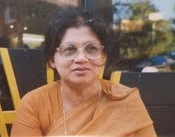
Liaqat Begum w/o Syed Hasan Askari

On the passing of my mother Liaqat Begum, written in 2007 by Musa Askari

It was a day like any other. The dawn light would emerge slowly enveloping the night. The stars would fade in the sky and the sun would rise brining with it all the glory it had to bestow upon the earth. This rising would remind all those with eyes to see that the Universal Soul was taking its place upon the Throne of creation. The Universal Soul emanating as a ray of light from the Sun of all suns, One who sustains all that simply IS.

On such a day she would rise from her sleep that morning perhaps with no idea that this was the last day upon the earth. That the ordinary everyday things she did every morning and afternoon would take on greater significance simply because it would be the last time she would perform them.

The last time she would look at herself in the mirror and see her reflection looking back at her as she preformed her morning ablutions and combed her hair and put on her clothes. The last time she would see an image of her image. An image that was a reflection of her very soul.

The last time she would prepare food and eat her last meal or take a sip of water or take a cup of warm tea into her gentle hands. How was she to know that as she held that cup so carefully it was the same way God had held her all throughout her life?

The last time she would tend her garden and clean the weeds and turn the soil so that it would breathe with more ease. The last time she would smell the fragrance of a flower or feel the earth in her hands. The very dust from which her Lord had made her body is what she tended to. This earth that she tended was a creation of the inner peace that always resided within her soul, alas that she could have tasted this peace more in her life.

The last time she would feel the wind upon her face and hear the flutter of birds wing and their song. The last time she would wipe her brow or feel a rain drop fall in to her hand.

The last time she would pray salat to her Maker and offer up her last prayer.

The last time she would speak with another, a son, a daughter, her grandchildren, her brother, her husband.

Then would come the time when tired and fatigued from her toil in the garden she would take her last footsteps in to the house. The footsteps that began when she first walked as a child in to her mothers’ arms were now about to end. The last thoughts that passed through her mind and the last memory, recent or old, that would flash across her consciousness. The last time she would lie down never to rise as a body again. The last breath as she slept and everything within her came to rest and she was returned from which she came. May God have mercy on her Soul.

Her last day was a good day. With her tending the garden she left a sign for others. Always tend to the garden of your mind. Clear out the weeds of thoughts that infect your emotions and distract you from yourself and from those you love and have hurt you. Remember they are weak also. Having done that pay attention as time passes to new weeds and clear them. Having done that turn the soil of your mind and regenerate with new flowers and let kindness blossom like a spring morning. Then you will see and feel that you are becoming free and able to see things as they really are.  

On the passing of a loved one we often think of ourselves here and when was the last time we saw them, held them, talked to them and heard their voice. It is also worth taking time to ponder what was their last day like? What was it like to have done the normal things for the last time?

It was like any other day.

*Therein, hides the beauty and kindness of God to my dear mother. That on taking her back He will not alarm her. He will not let fear come into her heart on the last day by letting her know it is the last day. Not on this day.

To Him belongs the Dominion, to Him belongs the Command.

In the very everydayness He has enveloped His Mercy to you on the last day. In the ordinary hides often the extra-ordinary. That God has weaved his taking you back in to the very fabric of your outward existence. When he is able to do this in your outer life what can he not do for you in your inner reflective and meditative life?

The inner life is what remains enshrined in the soul. This is the insignia within the soul of its association with body and leaving it again. The inner life has now burst through and can wait no longer to be the outer life of the soul. God is truly kind in helping with this transition by not alarming you on the last day.

As in birth a baby does not know it is about to be born so in death the mind and heart do not know with certainty that this is the day. He is the First and the Last. He is there at the birth of your life in this world, from the first cell to the passing of your life from this world. Why would he want to alarm you?

Every Day and Every Night and throughout all the days and nights He is ever-present. In such a presence we are humbled and truly kind and forgiving to each-other. By such a presence peace makers act and peace is bestowed and troubles are left far behind.

Every Day God gives you back your soul and so you rise to see your loved ones again and live another day until the last day. So live now until whatever day that be, live not in the past but in the now. In the everyday and ordinary God is to be found also.

She closed her eyes, she was tired now and wanted to rest and God heard her call and I pray she rests eternally and the flowers bloom eternally.

Oh my mother I remember you this day.

Salam alai kum. Salam alai kum. Salam alai kum.

Peace be upon you. Peace be upon you. Peace be upon you

* (And if there be a period allotted to all by fate, to anticipate the hour could not be a happy act” Plotinus)

* ( … as the eye waits on the rising of the sun, which in its own time appears above the horizon – out of the ocean, as the poets say – and gives itself to our sight” Plotinus)

“The Master’s Ring” by Musa Askari

By Musa Askari (penned 1991)

There were a group of travellers who strived to understand the nature of their “Self” by taking a path leading them to the innermost repose of their “Being”. Having attained the knowledge of seeing with “transparency” they were victorious over the fictitious presence, that “Alien” identity as Plotinus refers, which had sought to entrance them. Having arrived at this state of rest they were aware of being not only human, but also Soul-Beings. They had already forsaken the outter for the inner mode of gnosis and now eager to cross the threshold of the inner too.

For some of the group a “word” was enough to ascend to this bliss. For others the “Fatiha*” would suffice. For most the recital of the Remembrance of their Lord was a beginning. Such was the nature of the fellowship.

Whenever they gathered for meditation their Master would choose one to recite the Fatiha before entry in to Zikr* (remembrance). There was a novice among them. A frail old man on the verge of leaving this world. He had been with them many years. In all his years of service and devotion he had never been chosen to recite. In the beginning he did not expect to be asked and bowed his head when the moment arose. However, as the months and years passed this became increasingly the sole source of his concern and wonderment. Strangely, as a mark of his greater inner calm as opposed to his outter curiosity, he never once questioned or raised the matter with his Master. He waited patiently for understanding.

The night before his departure the old devotee was presented, by his Master, a ring with a cracked and chipped stone. That night he dreamt and it was revealed to him, through sign and symbol, how the stone came to be chipped (that itself a journey all its own). During the dream he passed away peacefully. The next morning his body was discovered and on his right hand was the Master’s Ring perfectly returned to its original form.

0________________________0

*Fatiha. The short opening chapter of the Quran, beginning, In the name of God, the Merciful, the Compassionate, Praise be to God, the Lord of the Worlds. An indispensable part of daily worship (salat).

*Zikr. Quranic in origin, meaning remembrance of God, along with fikr which is intellectual contemplation of the signs of God. In Sufi usage, it means a particular mode of remembrance, the recital of a Divine Name imparted to the novice for guidance and enlightenment.

*Soul-Beings. Term coined by Hasan Askari

“The Sound of Silence” by Musa Askari

One day a disciple, whose hearing was beginning to fade, asked his master about “sound”. He knew it would be one of the last times he could hear his master’s voice. He wished to take that voice with him on his journey into the realm of silence.

The master replied, “I can see that, given your situation, you are now fully attentive. But why has it taken so long to bring you to a state of such seriousness? Had you listened more closely when your hearing was not impaired, you would not be so anxious now. Is it not so that man was created to listen? What is the use of sound if not to be heard? As you hear the sound of your own voice, remember it is the sound of your Soul.”

The master continued, “There are some sounds that must be silenced and others nurtured. We in our ignorance and ingratitude have equated “presence” solely with sound. The sound of silence into which you are about to enter is not to be understood as a burden but a liberation. It is in such silence that the Divine Command is uttered perhaps. Think of this and rejoice.”

That night as his hearing slipped away he had a dream. He saw a lake of immense proportions, perfectly still. Above him the clouds were racing by at great speed. His heart was beating fast at some strange excitement. By the same swiftness with which they had come the clouds departed leaving him deafened by the sound of his runaway heart! His eyes remained closed.

Before him a single raindrop was descending from the heavens. The sound of its descent was like the song of the peacock, sad and melancholic. He was witnessing the descent of his own Soul! As the drop reached the lake’s surface the sun was rising upon the *horizon. When reaching to half its ascent the sun rose no further. The image falling on the water gave the appearance that it had risen fully, embodied and yet unembodied, reality of the sun and its image upon the water. The drop had now pierced the water. Ripples were forming and being sustained by that same drop which was now like a beating heart until the whole lake was covered by a tide of ripples emanating from one drop. This was what life could be without sound he thought and rejoiced!

By Musa Askari (penned 1992).

* ( … as the eye waits on the rising of the sun, which in its own time appears above the horizon – out of the ocean, as the poets say – and gives itself to our sight” Plotinus)

“The Dancing Pages” by Musa Askari

By Musa Askari 17th October 1991 – such was the feeling of expansion within my Soul as I lifted for first time “Alone to Alone” by Hasan Askari

The book is opened, A story is read, The reader leans back , And watches a mystery unfold. The book is fresh, The pages are crisp and firm, It is natural for the pages to return to their usual posture, They are strong.

As the reader leans away, A page from the left rises, As though helped by an invisible hand. At first it is a struggle to breakaway, To rise and swim against the current, But it is determined

 Just past midway it comes to rest, A solitary leaf of a book stands in the middle. Then suddenly it crosses over, And comes to rest, Gently gliding down to the right of the book, As though crossing from one world to the next.

 It will have to make this journey again and again, From moment to moment, For every reader that comes across it. For throughout their life the pages will re-enact this display, To remind us of the greater journey will all must make.

 There are only the pages, What of the words? And of the narrator of the words  

Self-Remembering

“He was now ready to start on his journey. He looked sad. The old man said: “Start, my son. You have to go a long way.” He started moving towards the door. The old man raised his voice: “Do not worry that you might be robbed of your possessions. None can rob you of your self”. Then he gave him his rosary: “Keep this, or better still wear it around your neck.”

“Give me a sign for the journey,” the young man requested with a choking voice. The old man held him in his embrace, and said: “Let this reflection of the moon in the river be a sign to you. Let your self-remembering be like this reflection!”

By Hasan Askari – “Alone to Alone”

Inter-dependence as an agent of Unity

To  say “All” implies Unity. Thus “All” diversity in the sensible realm if it is to possess unity; how does it display or present that unity? A unity that is not of its own. As beauty of a particular form is not the forms’ full possession. Beauty being bestowed. Unity in diversity is equally bestowed. The unity of the body for example. All organs operating in harmony, unaware so to speak, of each others’ particular function and purpose; yet inter-dependent. To interrupt the inter-dependence proving hazardous for the body. It is perhaps inter-dependence which implies a unity making order.

Inter-dependence thus being the agent of a Unity above it. Unity working through inter-dependence to bestow on body “health”. Inter-dependence between bodily organs implies also a limit, a term, a period of time. For the material world is prone to wearing. A cliff face today is not the same cliff face from decades ago having been weathered over time. Inter-dependence relating to the life of the body has a limited term. It cannot go on eternally.

Inter-dependence with body requires each organ working to its potential and purpose. Should one organ fail or weaken then the consequences of that failure are not limited to only that organ leading to other “weakenings”. Lungs may fail, circulation may be affected and so too the heart. Therefore, inter-dependence within the body is more than co-operation to sustain bodily life. Inter-dependence perhaps has its roots in a metaphysical origin. It is an image of something else. It exists so long as soul is conjoined with body one could postulate. Returning to a potentiality or latent phase within the soul when soul is free from association with body which is an image itself.

Are there any such other interdependencies pointing to a Unity in diversity within humanity? Thought for example. The power of an Idea. Love, Kindness, Generosity, mutual regard and other loftier Values. Diversity does not have to imply competition and exclusivity of claim; one-sidedness. That we know in its worst form as totalitarian and oppressively forcing conformity. Unity as stated in brief here is not conformity. When we say “All” we truly mean “All-Diversity” universally as The Unity and not our own collective lesser “all” of race, ethnicity, creed, language, culture and religion divisively expressed. Unity has no requirement to mean uniformity – like for like in other words. If  unity does fall to mean as such to conform and be uniform not only in outward social customs (secular or sacred) but also in control of our thought then it is not strictly a unity but instead a force for dis-unity as it will be in competition with other groups (secular or sacred) who equally claim unity as their sole possession. On the other hand when Unity is understood to be present in like AND un-like; Unity seen in such a way can help one to overcome conflict and opposition.

By Musa Askari