“A Day Like Any Other” by Musa Askari

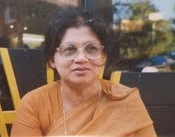
Liaqat Begum w/o Syed Hasan Askari

On the passing of my mother Liaqat Begum, written in 2007 by Musa Askari

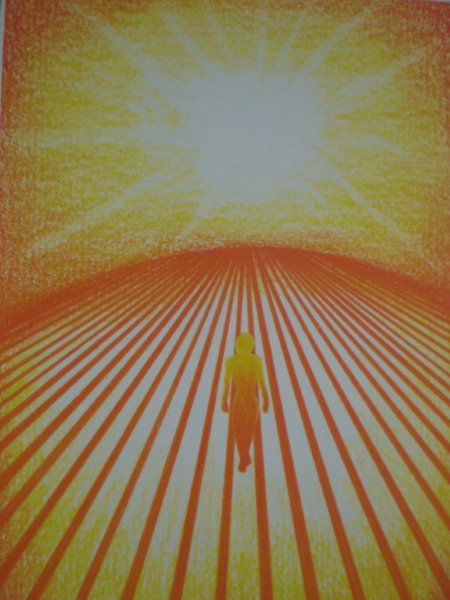
It was a day like any other. The dawn light would emerge slowly enveloping the night. The stars would fade in the sky and the sun would rise brining with it all the glory it had to bestow upon the earth. This rising would remind all those with eyes to see that the Universal Soul was taking its place upon the Throne of creation. The Universal Soul emanating as a ray of light from the Sun of all suns, One who sustains all that simply IS.

On such a day she would rise from her sleep that morning perhaps with no idea that this was the last day upon the earth. That the ordinary everyday things she did every morning and afternoon would take on greater significance simply because it would be the last time she would perform them.

The last time she would look at herself in the mirror and see her reflection looking back at her as she preformed her morning ablutions and combed her hair and put on her clothes. The last time she would see an image of her image. An image that was a reflection of her very soul.

The last time she would prepare food and eat her last meal or take a sip of water or take a cup of warm tea into her gentle hands. How was she to know that as she held that cup so carefully it was the same way God had held her all throughout her life?

The last time she would tend her garden and clean the weeds and turn the soil so that it would breathe with more ease. The last time she would smell the fragrance of a flower or feel the earth in her hands. The very dust from which her Lord had made her body is what she tended to. This earth that she tended was a creation of the inner peace that always resided within her soul, alas that she could have tasted this peace more in her life.

The last time she would feel the wind upon her face and hear the flutter of birds wing and their song. The last time she would wipe her brow or feel a rain drop fall in to her hand.

The last time she would pray salat to her Maker and offer up her last prayer.

The last time she would speak with another, a son, a daughter, her grandchildren, her brother, her husband.

Then would come the time when tired and fatigued from her toil in the garden she would take her last footsteps in to the house. The footsteps that began when she first walked as a child in to her mothers’ arms were now about to end. The last thoughts that passed through her mind and the last memory, recent or old, that would flash across her consciousness. The last time she would lie down never to rise as a body again. The last breath as she slept and everything within her came to rest and she was returned from which she came. May God have mercy on her Soul.

Her last day was a good day. With her tending the garden she left a sign for others. Always tend to the garden of your mind. Clear out the weeds of thoughts that infect your emotions and distract you from yourself and from those you love and have hurt you. Remember they are weak also. Having done that pay attention as time passes to new weeds and clear them. Having done that turn the soil of your mind and regenerate with new flowers and let kindness blossom like a spring morning. Then you will see and feel that you are becoming free and able to see things as they really are.  

On the passing of a loved one we often think of ourselves here and when was the last time we saw them, held them, talked to them and heard their voice. It is also worth taking time to ponder what was their last day like? What was it like to have done the normal things for the last time?

It was like any other day.

*Therein, hides the beauty and kindness of God to my dear mother. That on taking her back He will not alarm her. He will not let fear come into her heart on the last day by letting her know it is the last day. Not on this day.

To Him belongs the Dominion, to Him belongs the Command.

In the very everydayness He has enveloped His Mercy to you on the last day. In the ordinary hides often the extra-ordinary. That God has weaved his taking you back in to the very fabric of your outward existence. When he is able to do this in your outer life what can he not do for you in your inner reflective and meditative life?

The inner life is what remains enshrined in the soul. This is the insignia within the soul of its association with body and leaving it again. The inner life has now burst through and can wait no longer to be the outer life of the soul. God is truly kind in helping with this transition by not alarming you on the last day.

As in birth a baby does not know it is about to be born so in death the mind and heart do not know with certainty that this is the day. He is the First and the Last. He is there at the birth of your life in this world, from the first cell to the passing of your life from this world. Why would he want to alarm you?

Every Day and Every Night and throughout all the days and nights He is ever-present. In such a presence we are humbled and truly kind and forgiving to each-other. By such a presence peace makers act and peace is bestowed and troubles are left far behind.

Every Day God gives you back your soul and so you rise to see your loved ones again and live another day until the last day. So live now until whatever day that be, live not in the past but in the now. In the everyday and ordinary God is to be found also.

She closed her eyes, she was tired now and wanted to rest and God heard her call and I pray she rests eternally and the flowers bloom eternally.

Oh my mother I remember you this day.

Salam alai kum. Salam alai kum. Salam alai kum.

Peace be upon you. Peace be upon you. Peace be upon you

* (And if there be a period allotted to all by fate, to anticipate the hour could not be a happy act” Plotinus)

* ( … as the eye waits on the rising of the sun, which in its own time appears above the horizon – out of the ocean, as the poets say – and gives itself to our sight” Plotinus)

The Grand Canyon

By Hasan Askari from his book “Alone to Alone – From Awareness to Vision”

As he stood before the Grand Canyon, he was told by one of the guides that he was facing two billion years of rock. “Two billion years and one minute”, he said. The guide looked perplexed. “That one minute just included us standing right before the canyon”, he explained. But a voice older than the canyon seemed to reach him, saying: “You are not recalling another minute before the canyon was formed”. He remembered then he was more ancient than the Grand Canyon.

Within a split second or even less he was standing before the house of Porphyry in distant Sicily. It was late afternoon in one of the last years of the third century. As he approached the house, he could see Marcella, Porphyry’s wife, sitting in one of the windows looking towards the small pathway he was climbing to reach the house. She waved her hand. It looked like a white bird rising a little from the branch of a tree and settling down again. She opened the door, and with her usual calm led him into the house. She was holding a file of papers. As she sat down, she said, “Porphyry is in Rome on some business. He will be back within a couple of weeks. This is his letter. I think I should share it with you.” She handed over the letter to him. He started reading while she got up to prepare something for him to eat.

As he started reading the letter, he knew with tears in his heart that though there were several knowers, knowledge was one: “If we were just a body, one in Sicily and another in Rome, you are far away from me, and I very much yearn to return as soon as possible. But I know, as you also know, that we are more than a body, and therefore I am with you and you are with me”.

Marcella sat down after passing on to him a plate with some bread and cheese. “Are you alright?” she asked. He looked at her wondering how much she was aware of his distress, of his wanderings, of his sorrow. “I should tell you something, my friend”, she spoke with affection, “you will be on this earth again a few hundred years hence, and after many years of quest you will fall in love with the teaching of Porphyry’s Master”. He waited. She continued: “Philosophy and Prophecy will unite once again. But you must not waste that opportunity.”

She appeared then as the High Priestess of the second card of Tarot. “Do not concern yourself with how I appear to you,” she had already read his mind, “Let me tell you that you appear sometimes as the Magician, the Hanged Man, and the Fool all at once.” He could not control his tears. She took his hands and held them gently and her eyes were on the ground. A strange light shone on her face. The sun was setting on the sea. A cool breeze was blowing.

He asked, “What will be that time upon the earth?” She did not reply.

The Dialogical Relationship between Christianity and Islam

By Professor Hasan Askari (published 1972 Journal of Ecumenical Stidies)

“It is sometimes easier to reflect with the aid of poetic metaphors, particularly when one has to tread the difficult space between two massive traditions. Where the conceptual finds the door solidly barred against all entry, the symbolic carves its way in. Where the theologian is confident within his boundaries, the poet takes the risk and leaps beyond. Rumi, the Persian Sufi poet, once said: 

“O for a friend to know the sign, And mingle all his soul with mine.”

“With the help of these two line, let us reflect on the “friend,” the “sign,” and the mingling of “all his soul with mine.” Is there any common sign between Christians and Muslims? Would they become friends? And would their souls mingle?”

“There are certain difficulties in the way. Dialogue is sometimes misunderstood by Muslims as a masked attempt at syncretism. The suspicion is not always without basis. The Muslim immediately becomes self-conscious of the differences that lie between Christianity and Islam. He often fails to notice the deep and vast changes the Christian faith, in its interpretation and expression, has been undergoing in almost every century. The notion of an evolving and expanding faith is somehow alien to the Muslim mind. It is however strange that evolution is often considered as betrayal and perversion of the original dogma. Herein lies, I suppose, that most serious disparity between the Christian and Muslim attitudes to questions of faith. Secondly, the political experience of Christianity, recently in the form of imperialism, hampers on both sides the openness and trust necessary for an informal encounter. Thirdly, the cultural experience of Christianity, particularly in the shape of science and technology, is usually looked upon as a threat to Islamic civilization. The Christian-Western influence is held responsible for secularization of culture and institutions. The intermingling of academic and religious traditions by Muslims is another aggravating factor. One often comes across an intriguing mixture of fantasy with fact, inquiry with apology. It appears that, more than the primary and fundamental differences in the dogmatic frame, the differences in historical experience and cultural development are responsible for incommunication and mistrust among Christians and Muslims.” 

“But equally grave are certain features in the Christian situation. Many a complex issue owe their origin to the scientific traditions as well. The speech of religion is being determined after the model of the speech of science. The process of secularization has already taken command paving the way for the priority of “word of man’ over “Word of God.” Above all, the entire theory of communication on which most of the theologians and philosophers rely is a historicist theory through and through. We are told that the first revolution in communication was brought about by scientific invention and mechanical engineering, and the heroes of this revolution were Thomas Edison and Alexander Graham Bell. At the heels of this revolution came another, the consequence of the theory of cybernetics headed by Norbert Wiener and Dichter. It was the discovery of the unity of communication and control. All communication to the giant computers seems to take place in an imperative mood. Wiener is afraid that this process might be reversed with immense consequences for the human civilization: The process of from man to machine might soon become from machine to man. A corrective against the cybernetic threat becomes imperative. The foundations of a third revolution have to be explored.”

Continue reading at http://www.sierraf.org/articles/Askarieh.pdf

From Interreligious Dialogue to Spiritual Humanism

By Professor Hasan Askari

“I have always looked at religious diversity with a sense of wonder. The differences between religious beliefs and practices have never bothered me, nor have their conflicting truth-claims unnerved me. I was mystified by the fact of diversity itself. But the call to tolerate and coexist with the other in mutual respect, however desirable, was not enough for me. The intuition underlying the ancient saying, “the lamps are many but the light is one,” gently led me on to look for a theological affirmation and validation of more than one religion. What was lingering in the depths of my soul came to the surface of my consciousness sometime in the mid-1970s when I clearly realised that transcendental reality could not be equated with any one religious form; otherwise a religion will become a god and that would be utter blasphemy. The prospect of a religion reflecting the Absolute absolutely would turn that religion into the most dogmatic and oppressive belief system imaginable. Hence, there should be room between the religions for mutual critique and complementarity. In turn, this should generate a religious need for religious plurality and diversity.”

“Each religious form should then express the beauty and the splendour, and the transcendence and the mystery, of the Supreme One in terms of its own language and culture, framed in its own historicity and reflected in the vision of its pioneers. To enter into dialogue is to celebrate the splendour of the infinitely Supremely Good, in the unity and diversity of our faiths. By the theological affirmation of religious diversity, our coming together in dialogue becomes akin to an act of worship; our exclusive witness is transformed into co-witness; our one-way mission is replaced by mutual mission.”

Continue reading at InterReligious Insight http://www.interreligiousinsight.org/January2004/Jan04Askari.html

“The Master’s Ring” by Musa Askari

By Musa Askari (penned 1991)

There were a group of travellers who strived to understand the nature of their “Self” by taking a path leading them to the innermost repose of their “Being”. Having attained the knowledge of seeing with “transparency” they were victorious over the fictitious presence, that “Alien” identity as Plotinus refers, which had sought to entrance them. Having arrived at this state of rest they were aware of being not only human, but also Soul-Beings. They had already forsaken the outter for the inner mode of gnosis and now eager to cross the threshold of the inner too.

For some of the group a “word” was enough to ascend to this bliss. For others the “Fatiha*” would suffice. For most the recital of the Remembrance of their Lord was a beginning. Such was the nature of the fellowship.

Whenever they gathered for meditation their Master would choose one to recite the Fatiha before entry in to Zikr* (remembrance). There was a novice among them. A frail old man on the verge of leaving this world. He had been with them many years. In all his years of service and devotion he had never been chosen to recite. In the beginning he did not expect to be asked and bowed his head when the moment arose. However, as the months and years passed this became increasingly the sole source of his concern and wonderment. Strangely, as a mark of his greater inner calm as opposed to his outter curiosity, he never once questioned or raised the matter with his Master. He waited patiently for understanding.

The night before his departure the old devotee was presented, by his Master, a ring with a cracked and chipped stone. That night he dreamt and it was revealed to him, through sign and symbol, how the stone came to be chipped (that itself a journey all its own). During the dream he passed away peacefully. The next morning his body was discovered and on his right hand was the Master’s Ring perfectly returned to its original form.

0________________________0

*Fatiha. The short opening chapter of the Quran, beginning, In the name of God, the Merciful, the Compassionate, Praise be to God, the Lord of the Worlds. An indispensable part of daily worship (salat).

*Zikr. Quranic in origin, meaning remembrance of God, along with fikr which is intellectual contemplation of the signs of God. In Sufi usage, it means a particular mode of remembrance, the recital of a Divine Name imparted to the novice for guidance and enlightenment.

*Soul-Beings. Term coined by Hasan Askari

The Snow, The Cloud, And The River

By Hasan Askari from his book  “Alone to Alone – From Awareness to Vision”

We were driving through the Rockies. We had left Aspen behind and were climbing towards the Independence Pass. The atmosphere was clear, bright and pure. “In autumn aspen trees turn gold”, I heard my companion thinking aloud. A quick succession of seasons passed before my eyes, and I touched within me that still point around which all movements seemed to revolve.

We were now climbing higher and higher, and behind me the mountain range I could see one particular snow-clad peak, sometimes visible, then hidden, and visible again. It seemed like the glimpse of my true self – sublime, restful and serene.

All mountain peaks, something said to me then from within, are in constant communication all around the planet.

As we looked to our right we could see down below a few hundred feet deep a shining stream creeping through the valley like a silver snake. There was snow on the slopes and on the mountain tops, and clouds over them in still-slow journeying. The snow was sad, and complained to the passing cloud: “Look, Friend! I am imprisoned here, stuck to these rocks. Lift me up, and allow me to be your companion.”

The cloud replied: “Listen: The river from down below in the valley is trying to say something to you.” A sorrowful voice rose from the depths of the valley: “Lift me up. O Dear Snow, and join me with your eternal rest. I am tired of flowing endlessly.”

The snow looked with blank eyes towards the passing cloud which was now low enough to touch the snow gently and move on. The cloud said: “Do not be anxious. Our Being is one, though our stations and states are different.”

(*for more on Hasan Askari see: above tabs: “Hasan Askari” “Human Nature” & “Speech – Spiritual Humanism)

“The Sound of Silence” by Musa Askari

One day a disciple, whose hearing was beginning to fade, asked his master about “sound”. He knew it would be one of the last times he could hear his master’s voice. He wished to take that voice with him on his journey into the realm of silence.

The master replied, “I can see that, given your situation, you are now fully attentive. But why has it taken so long to bring you to a state of such seriousness? Had you listened more closely when your hearing was not impaired, you would not be so anxious now. Is it not so that man was created to listen? What is the use of sound if not to be heard? As you hear the sound of your own voice, remember it is the sound of your Soul.”

The master continued, “There are some sounds that must be silenced and others nurtured. We in our ignorance and ingratitude have equated “presence” solely with sound. The sound of silence into which you are about to enter is not to be understood as a burden but a liberation. It is in such silence that the Divine Command is uttered perhaps. Think of this and rejoice.”

That night as his hearing slipped away he had a dream. He saw a lake of immense proportions, perfectly still. Above him the clouds were racing by at great speed. His heart was beating fast at some strange excitement. By the same swiftness with which they had come the clouds departed leaving him deafened by the sound of his runaway heart! His eyes remained closed.

Before him a single raindrop was descending from the heavens. The sound of its descent was like the song of the peacock, sad and melancholic. He was witnessing the descent of his own Soul! As the drop reached the lake’s surface the sun was rising upon the *horizon. When reaching to half its ascent the sun rose no further. The image falling on the water gave the appearance that it had risen fully, embodied and yet unembodied, reality of the sun and its image upon the water. The drop had now pierced the water. Ripples were forming and being sustained by that same drop which was now like a beating heart until the whole lake was covered by a tide of ripples emanating from one drop. This was what life could be without sound he thought and rejoiced!

By Musa Askari (penned 1992).

* ( … as the eye waits on the rising of the sun, which in its own time appears above the horizon – out of the ocean, as the poets say – and gives itself to our sight” Plotinus)

“The Dancing Pages” by Musa Askari

By Musa Askari 17th October 1991 – such was the feeling of expansion within my Soul as I lifted for first time “Alone to Alone” by Hasan Askari

The book is opened, A story is read, The reader leans back , And watches a mystery unfold. The book is fresh, The pages are crisp and firm, It is natural for the pages to return to their usual posture, They are strong.

As the reader leans away, A page from the left rises, As though helped by an invisible hand. At first it is a struggle to breakaway, To rise and swim against the current, But it is determined

 Just past midway it comes to rest, A solitary leaf of a book stands in the middle. Then suddenly it crosses over, And comes to rest, Gently gliding down to the right of the book, As though crossing from one world to the next.

 It will have to make this journey again and again, From moment to moment, For every reader that comes across it. For throughout their life the pages will re-enact this display, To remind us of the greater journey will all must make.

 There are only the pages, What of the words? And of the narrator of the words  

The Lord of the Humming Bird

 By Hasan Askari from his book “Alone to Alone”

hummingbirdThe notice at the entrance of the park reads: Roxborough* is made up of many inter-related elements, some are living and some are not. The plants found here are dependent upon the soil and the moisture which are determined by rock and climate. The rock formations direct the flow of air current and water, creating small pockets of different climates, micro-climates, responsible for the great variety of plant life growing here.

Roxborough is a place of meetings: where the great plains and the Rockies meet. Here the rolling prairie ends and the Front Range abruptly rises. The grasses of the high plains mingle with the oak of the foothills, with the pine and the aspen. A meeting place of wind and weather, of warm and cool air, a coming together of many natural forces. In one word, the mystery of man.

?????????????????????????????????????????????????????????The rock layers were deposited two hundred and seventy million years ago. A tremendous upheaval some seventy million years ago lifted them, and so they stand in steep profiles, their present shapes sculptured by weather, water and wind over a vast period of time. Amidst those rocks I saw a humming bird, and I bowed to its sight as a sign of my Lord.

*Roxborough is located a few miles outside of Denver, Colorado.

*Photos by Mia Caruso  

The Seven Steps

 
THE SEVEN STEPS  

by Hasan Askari from his book “Alone to Alone”

 There are seven steps: Testimony(“tasdiq”). Trust (“tawakkul”). Patience (“sabr”). Gratitude (“shukr”). Remembrance (“zikr”). Love (“hub”) and Gnosis (“irfan”).

When one knows, one loves; when one loves, one remembers; when one remembers, one is grateful; when one is grateful, one learns to be patient, and it is the proof that one trusts; and when one trusts, one has given a true testimony.

Gratitude is faith. It is the cornerstone. It is the bridge. Without gratitude there is no strength in patience and no pleasure in remembering. Gratitude is for both material and spiritual gifts, but there is another far higher gratitude, gratitude to the Supreme who is all possessing and yet, what is in reality His, He calls it ours.

Gnosis results in love. Love is remembrance of the object of love. When true gnosis is there every other step follows effortlessly. The begining and the end are connected without break or interval.

 Trust in the unseen is the reliable proof of a testimony being true. If there is no trust as such, testimony in any form is false.

As soon as you talk of the soul you talk of the whole of Humanity