“That’s Good” by Lee & Steven Hager

Lee & Steven Hager, the authors of “The Beginning of Fearlessness: Quantum Prodigal Son.” Writing about themselves, “We’re just like you. We have no special qualifications, but after years of struggle, we discovered the key to living a life of fearlessness. If we could, you can too.” Please continue reading more about Lee & Steven and their unique journey of living a life of “fearlessness” http://www.thebeginningoffearlessness.com/about/

“That’s Good”

Written onAugust 27, 2011 by Lee & Steven Hager

http://www.thebeginningoffearlessness.com/2011/08/27/thats-good/

We say those two words quite often, but almost always in relation to something happening outside of us, something we have judged as positive, something that appears to be ‘in our favor.’  Of course judgment cuts two ways, so we will inevitably find ourselves saying two other words: “That’s bad.” Although we regularly hear people use the popular catch phrase, “It’s all good,” most who utter those words continue to label their own experiences as either good or bad.

When we view life from the perspective of good/bad, right/wrong, positive/negative, we live on a constantly swinging pendulum that’s set in motion by the things occurring outside us. The energy from our happiness sends the pendulum swinging in one direction. But when the conditions that caused our happiness no longer fuel our energy, the loss of momentum will inevitably send the pendulum swinging back in the opposite direction and we become unhappy. Much as we would like, it’s impossible to keep the pendulum on the side of “That’s good.”  However, it is possible to be an exception to this rule.

It was said that the Taoist sage, Chuang Tzu, replied, “That’s good,” no matter what anyone told him. As you can imagine, this caused many who had come to Chuang Tzu with their bad news to go away offended or come to the conclusion that Chuang Tzu was either deaf or had lost his wits. Why would a man known for his wisdom treat the misery of others in such an apparently unfeeling manner? But it was also reported that Chuang Tzu said, “That’s good” when he was told that his own son’s legs had been broken in an accident. On the surface this appears senseless.  To tease out the meaning, let’s look at the story of another wise man that treated his own misfortune in the same way.

Recently our dear friend Musa Askari (also one of our guest bloggers) acquainted us with a wonderful book of Sufi wisdom stories titled Solomon’s Ring. It contains the stories of Sufi master Ghauth Ali Shah Qalander that were scribed by his disciple, Gul Hasan. The stories were translated from the original Urdu language by Musa’s father, Hasan Askari, a highly respected Urdu scholar and linguist.  As we quote a few lines from one of these stories, also titled “Solomon’s Ring,” you cannot help but notice the similar responses of Chuang Tzu and Solomon:

“It is said that when Solomon lost his ring of power and wisdom he said, ”Al Hamdu ‘Lillah [All praise be to God].  And when he found the ring, then also he said, “Al Hamdu ‘Lillah”

Not only did Solomon consider each incident ‘good,’ he gave thanks for it. Since Solomon’s wisdom was legendary, we might assume that it was the ring itself that gave Solomon’s wisdom and great power. In that can case, we would expect that the loss of the ring would receive a very different reaction. Yet Solomon, like Chuang Tzu, met each supposedly ‘good’ or ‘bad’ experience with the same response. How did these sages manage to avoid the extremes of emotion we so often feel in connection with the things we judge to be either good or bad? What did they know that enabled them to evaluate all occurrences in the same way?

Let’s return to Chuang Tzu. He said “That’s good” after he was told about his son’s accident, and the people thought he was crazy. The next day when soldiers came and hauled their sons away to force them into the army and Chuang Tzu’s son was not taken, they thought he was insightful. When his son’s impending marriage was called off and Chuang Tzu said, “That’s good,” they thought he was crazy. When the ex-fiancé died a few days later, they praised Chuang Tzu’s insight once again. Like Chuang Tzu’s neighbors, we might think that he could see into the future, but instead he had insight that was far more valuable.

Chuang Tzu didn’t stop the pendulum swing by controlling his reactions to things that happened outside him; he had gotten off of the pendulum all together. This doesn’t mean he was apathetic or disengaged, he just saw things in a very different way and was responding from that perpective.  Although he understood that conditions and experiences in this world would continually change, he had become attuned to something far greater. He called this something the Tao; you may call it God, universe, All That Is. The name doesn’t matter, but understanding that this greater power lifts us out of the duality of good/bad, right/ wrong, does. Chuang Tzu and Solomon had each traded limited perception for vision. They both saw past the misperception that we are a mortal body that can be harmed by the experiences taking place in this world and knew that we are one with the immortal Divine.

In “Solomon’s ring,” Solomon says that the praise he gave to the Divine when he lost and found the ring did not come from the perspective of human logic or emotion, but was “on the basis of the state of my heart.” Since his heart was one with God, he said, “The heart was neither distressed at [the ring’s] loss nor overjoyed at its recovery.” He knew that his wisdom and power both issued from his oneness with the Divine not a material object, and could never be threatened by any experience in this world. As the story of Solomon’s ring concludes, we’re told, “Solomon’s ring was an outer token of inner remembrance and stability.”

There is no need to continue riding the wild swings of the pendulum of duality and misperception. We are all called to Oneness with the Divine and can experience this world in peace and tranquility as Chuang Tzu and Solomon did. Recognizing our oneness with All That Is allows us to let go of misperceptions and see with the vision of the heart; this is the beginning of fearlessness.

“Conviction of the Heart- Hasan Askari” by Mia Caruso

Mia Caruso is a voice for The Soul. She is the creator of Soul Magic-The Movement, dedicated to connecting humanity with its true power and Spiritual Essence. Mia teaches with passion that we are spiritual beings having a human experience, and our true power comes from aligning the intentions of our human personality, with the nature of our eternal Soul. Continue reading about Mia at http://soulmagic.biz/?page_id=2 

“Conviction of the Heart- Hasan Askari”

By Mia Caruso written on 15thApril 2011 http://soulmagic.biz/?p=395

I learned this week, that as a voice for the Soul, and a Channel for God’s love, I must be open to receive the many teachers God will send to help me in my work in the world.  I have become friends with Hasan Askari’s son Musa @alone2alone, on Twitter.  This week Musa and I had this magic twitter moment when a simple conversation turned into a moment of Soul Awakening.  As a result, I learned about who Hasan Askari was and I was introduced to his writings.  As this was happening I could feel deeply that Hasan was an important man of love and spirituality, and that I needed to read his works.  As I began reading some of his writings,  I started to see that this man spoke of a new world, in which all people of all religions first see themselves united as Divine souls, each an individual part of the same glorious God.  He said in the article, From Interreligious Dialogue to Spiritual Humanism, (2004) “Before we ask about the other, out there, we should ask about the other in us, our nobler and loftier companion, our Soul, which with one hand holds our body and mind here on earth, and with the other holds on to the Divine.” He goes on to say, “We have first to wake up from the spell which our collective identity, whether it be race or religion has cast upon us, and see the sun of awareness rising in the horizon of souls.”

I give thanks to God for sending me the words and thoughts of Hasan Askari.  I will treasure them and they will add much strength to the conviction of my heart.  To read more about Hasan Askari visit, https://spiritualhuman.wordpress.com/. Here is my channeled message about this topic:

Dear God, please tell me about my knowing Hasan Askari and his son Musa….

Good morning dearest Mia Soul Magic.  The birds sing songs of love and joy outside your window today.  They rejoice in the glory of a new sun rising.  They are simple creatures, and they live simply to be, and enjoy the gift of life and nature.  This is a gift to you, for as a voice for your immortal Soul, so must you live simply to be and enjoy your life and nature.  Hasan Askari was a man who sought the face of God in all and everyone.  He was a pioneer, a visionary and a pillar of the new earth.  His writings speak of the gentleness of human kindness when mankind is aware of its everlasting presence at the table of the Creator of all.  I have sent you his works for wisdom and inspiration.  For your work in the world, your special message of love can only be fortified by his great strength and conviction.  It takes conviction of the heart to be a pillar of the new world.  This man had this quality and most importantly a deep love for the Soul and the gift it had to give as the great equalizer of all of mankind.  Every person who walks the planet has this in common, the essence of who they truly are, the light that shines brightly combining with the light of the great I AM!  Take the messages you find in the writings and thoughts of Hasan Askari and use them as a lantern to help light your way Mia.  Take them into your heart and allow them to light an even deeper more vibrant fire of love for the Soul within you.  Be well Mia and know that I am always with you.  Rejoice!

~Mia


“If You Find Me” by Hasan Askari

Muslims thought that Kabir was a Muslim. Hindus regarded him as Hindu. But he was independent of them both.

When the hour of his death drew near, the Muslims asked him whether he would prefer to be buried. He replied: If you find me. Hindus asked whether he would like to be cremated. He replied to them also: If you find me!

When that moment came, Kabir locked himself in his room. When it was opened, there were just a few flowers lying on his bed!

Kabir once cooked some bread, and as he sat down at his doorstep to eat, a stray dog came from nowhere and took away that bread from his plate. He ran after the dog with a cake of butter in his hand saying: Take the butter as well, for the bread will taste good with the butter. The people who saw this ridiculous sight started wondering that Kabir had gone mad. Yes, he said, Kabir is gone mad exactly as copper goes mad and turns to gold in the hand of the alchemist, or as an ordinary tree starts smelling sweet in the company of a sandal-tree, or as a river goes mad when it merges with the sea.

Kabir also said: A servant is his servanthood should be like a stone lying on the road. But it should not be so, he later corrected himself, for in that case it will injure the travellers. The servant should then be like dust. No, he said, this also is not proper, for it will rest on the hands and the feet of the travellers. The servant should then be like the lord. But of what use, he questioned, for the lord has power over all things. The servant, in truth, should be unable to do anything.

Baba Lal, one of the disciples of Kabir, once said to *Dara Shikoh: The Masters are of four kinds: Some are like gold and they, like gold, cannot transform others into gold; some are like the alchemists; whoever comes into contact with them turns into gold; some are like sandal-trees, and whosoever remains in their company becomes like them, and some are like the lamps from which thousand lamps are lighted.

(Alone to Alone: From Awareness to Vision, by Hasan Askari)

*Dara Shikoh: eldest son of the Mughal Emperor Shah Jahan builder of the Taj Mahal)


Let Forgotten Memories Unfurl by Musa Askari

What is the moment?

When buds turn to flower

When clouds release a shower

When winter releases from its heart spring

Do you ever wonder at such things? 

Have you ever wondered

Why you are here?

And cried a silent secret tear

Have you ever wondered

From where did you begin?

Which mother’s milk did you abandon never tasting? 

Even though you may be trapped and bound

By this world that has let you down

Where are those first footprints to be found? 

Look not for them

In your earliest childhood days of this world

Continue Beyond

Let forgotten memories unfurl.

It was in March 1993 I put together the words as above. I was in my early twenties. It was a time of continued inner expansion. Many things were becoming clear on the direction my life may take. I was not only reading Plotinus (The Enneads) but also hearing my father, Hasan Askari, talk about the great mystic-philosopher, considered the father of Neo-Platonism, who is Soul through and through. I returned again and again to my father’s book “Alone to Alone” which had been published a few years earlier and new meanings came to light. The expansion I refer to was centred about one word, “Soul”: that impartible, invisible, indivisible companion of our self, both one and many at the same time. 

I learned of Plotinus’s term for the Supreme, The One – The Good. I heard about his system which referred to “emanation”. That from The One, who is above all association, emanates The Intellectual Principle, from which comes The Universal Soul and then The Individual Soul. I heard about such terms as conjoint; association of Soul with Body, with Matter. One of the most beautiful things I recall, ever-fresh, was hearing Hasan speak of Plato; that it is not the Soul in Body, but rather it is the Body in Soul. This had a transforming effect upon my thinking, upon my spirituality. It resolved many issues on the relationship between Body and Soul. It opened new doors. And still we had not come yet to ourselves; all this was Soul entire, Soul un-embodied.

It is important I explain a little what I mean by “direction”. I do not mean any worldly direction of occupation or career, of planning one’s life academically or anything of that nature. “Direction” was for me an inner movement which would dictate the outer movements.  I was already a student of my father’s work for many years. The beauty about his manner of teaching lay in that it was never forced. It was simply presented. We engaged in discussion deeply, or I observed him in dialogue with others. I observed him all on his own. And despite many serious challenges in life I witnessed an unfailing dedication to both his work and his inner self-mastery, which was one and the same. It was at moments observing a great artist at work, sculpting, painting or reflecting. 

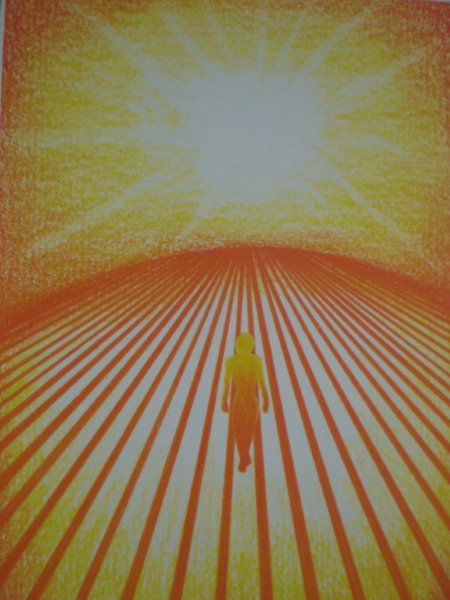
To see his face light up at the dawn of some new idea or unravelling of some mystery was for me like watching a sun rise above the *horizon. The faint advancing light that ushers in the arrival of the actual Sunrise. Ideas used to dawn upon him wherever and whatever he was doing. Either in conversation-encounter with others or all alone sitting in silence. Observing him I was certain of one thing, his mind was never far from the remembrance and praise of God.  One of the greatest lessons I was taught by him was to seek the company of solitude. To seek out time for oneself during the course of the day, to think and reflect, to be still, to pray, to remember The Supreme. It was as if one could spend an entire life time in that silence. The days could have come and gone, the seasons passing as like rushing clouds overhead. The sun could have risen and set countless times, one would never have known. 
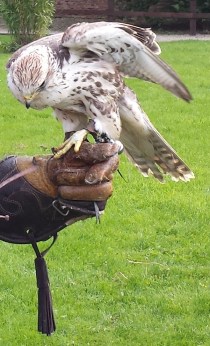
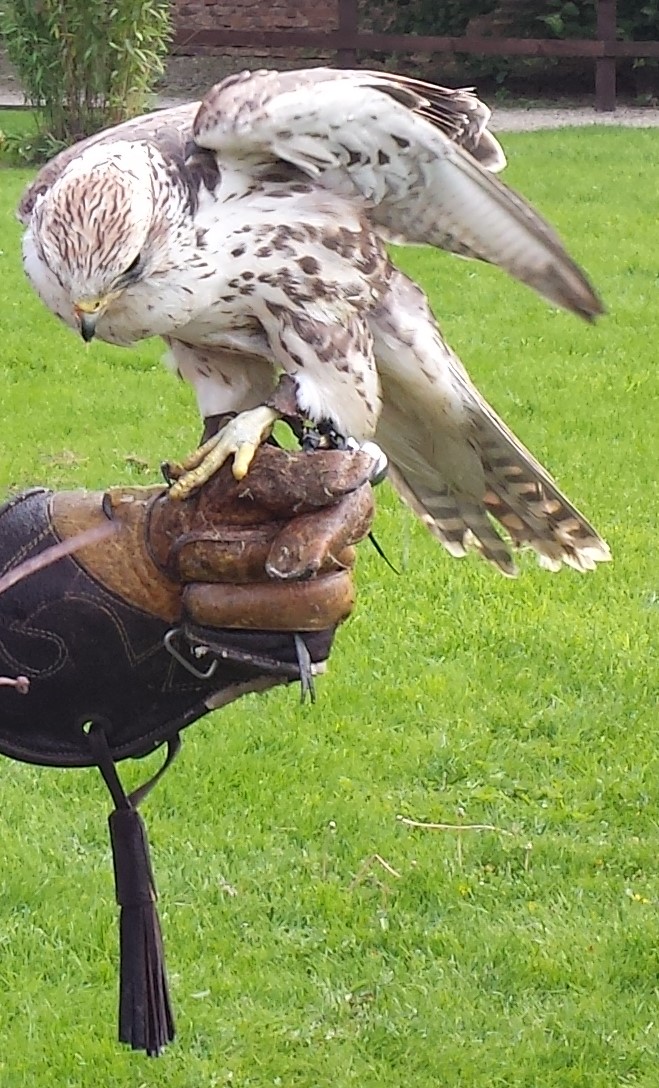
Falcon

I developed the habit early on of waking up and being alone in silence with solitude. It was at one such moment I reached for pen paper and the poem “let forgotten memories unfurl” came about. A thought came to me. I put down the first two lines and it went from there. Ideas, images and ideas behind those images were my torch bearers, they guided me and I followed. Within those moments of the night I was seeking some understanding of soul, something, anything. To move from the discursive to the intuitive and spiritual. To lift the words of my teacher from the page and carry them upon my head as an offering for my Soul to pluck me on flight to some deeper understanding. As like an eagle or falcon plucks some morsel of food not forgetting to return to the “Hand” that released it. Talking and hearing about Soul from Hasan I came to notice the world about me more, the physical world, nature for example.

I reflected on the simple beauty of nature and started contemplating another moment within nature. One moment and yet a multitude of moments. The moment when a bud decides to flower, clouds releasing their shower. It was not that I was seeking an exact temporal timeline, that was not the goal. The goal became to ponder and reflect. To imagine oneself just being present at the very moment one particular bud decided to begin its flowering. It was as if the act of observing and flowering were one act but in different forms. To imagine that which called forth the bud to flower was the same which called one to notice it. Symbolically, one of the ways a flowering bud may be understood is akin to our eyes opening from a deep sleep.

The beauty of a bud is further increased when its petals have opened fully, reaching for the sun much like our own physical eyes more beautiful once open and light hits the optic nerve. Can one bear witness to any physical eye being beautiful in the dark? Whilst closed the beauty of our eyes is concealed, but would we deny, even when closed, that the very “Idea” of an eye is a beautiful thing. An “Idea” of beauty by which other beauties are seen, a hierarchy of Beauty, of Ideal Forms, intangible and immaterial. Now we may invoke the adage, “the eyes are the windows to the Soul”. Sometimes both acts, flowering and observing, are mirrors and the original is out of sight, at others one is the mirror and the other is the original standing before it.  It all depends at which point within the hierarchy one is “standing” as Soul. 

There also comes a point to turn the arrow of inquiry from nature to oneself, from outer to inner. To ask deeply, with meaning, with tears, with a yearning like never before, “why am I here?” Again it was not any conclusive answer I was searching. I was not seeking to unveil some crystal ball and peer in to it becoming so disoriented whereby I lost sight of the very thing that brought me to ponder the question. The power was in the question itself. The question was the guide and that I tried to keep intact. 

In coming back to Soul, on this poem, another idea came to me. Namely, above our memory, a timeline from birth to the present moment. Above all the experiences, all relationships, above all these memories, tragic and joyous, above even our dreams, there is another memory. A more Ancient Memory, that of Soul. Embedded within that memory is a “Call”, a Command almost. A beckoning for the Soul to turn its gaze from looking down at what it has created, forgetting its priors and thus forgetting its own inner memory. A “Call” to become free of being infatuated by its own beauty and seek the home of that Light which shines within it. The Home of Beauty, that from which Beauty emanates.  To look up, as it were, to its Source. Within the Islamic tradition there is a beautiful way of recalling this memory when The Quran reminds, “We are of God and unto God we return”. In other words one’s Soul is from God and unto God it returns. Quoting Hasan Askari from his 1995 speech on Spiritual Humanism, “our journey ultimately is from soul to God. Pure is your soul, purer is your approach to God”. https://spiritualhuman.wordpress.com/speech-hasan-askari-spiritual-humanism/  

We already accept there is a memory in to which we are born. A memory we have no knowledge of as we are born. It is a memory presented to us as integral to our worldly identity, a pseudo-identity I would say, a garment, a covering.  Memory upon memory which over time distances us from a far more Ancient Memory within the Soul having the potential to distance us from one another. Namely, in general terms, our collective identities of race, ethnicity, nationality, gender, culture, language and religion.  Within these collective memories there are indeed gems, hints, clues, great insights, much meaning. However, it depends on how such socio-historic memories are relayed to us. As complete and absolute or temporary and symbolic.  

If we can accept, by example of such collective identities, the principle of a “memory” before our knowing of it, before our birth, then perhaps we may begin to explore another Memory above the ones presented to us here through our individual-collective lives and histories. Through story and art, through encounter and co-presence. Through Soul! Upon meeting another let us pay attention to their story for who knows what buds are beginning to flower and what forgotten memories are beginning to unfurl for both the speaker and listener.  

Originally published in “The Beginning of Fearlessness” c/o Lee & Steven Hager 

Further reading: Plotinus, The Enneads (The Knowing Hypostases): “If the Soul is questioned as to the nature of that Intellectual Principle – the perfect and all-embracing, the primal self-knower – it has but to enter into that Principle, or to sink all its activity into that, and at once it shows itself to be in effective possession of those priors whose memory it never lost: thus, as an image of the Intellectual-Principle, it can make itself the medium by which to attain some vision of it; it draws upon that within itself which is most closely resemblant, as far as resemblance is possible between divine Intellect and any phase of the Soul.”

Further reading: Plotinus, The Enneads (Love): There are souls to whom earthly beauty is a leading to the memory of that in the higher realm and these love the earthly life as an image; those that have not attained to this memory do not understand what is happening within them, and take the image for the reality.”

* ( … as the eye waits on the rising of the sun, which in its own time appears above the horizon – out of the ocean, as the poets say – and gives itself to our sight” Plotinus)


“Journey of Pearls” by Musa Askari

JOURNEY OF PEARLS by Musa Askari

Listen at http://www.blogtalkradio.com/rysa/2011/06/14/art-and-ascension 

You tell me your story. I will tell you mine and somewhere along that road of sharing, perhaps we may encounter one another more deeply than otherwise would have been possible. Seeing and hearing in our testimonies some glimpse of that which unites us. That which beckoned us here now to be before one another.  Long before we met and spoke of our lives something has always been running through all our lives, an invisible thread of connection. What could be more invisible than Life itself, Than Soul? Whose presence, coming and going is outside of all our hands. 

As those beautiful pearl threaders sitting in silence, their act of fashioning a pearl necklace itself a meditation. As they reach for each pearl it represents a life, yours and mine, and so the time passes having placed one pearl beside each other they lay it before them and the pearls start to sing and vibrate. Listen! For now we can hear their story of how they were plucked from the depths of the oceans, carried upon boats and brought to shore. Taken from “eternal rest” they journey now in “perpetual motion”. Traded and sold, bartered and exchanged passing from hand to hand, homeless, placeless, until they arrive in the midst of the Master Pearl Necklace Maker. Tucked away in some side street of some busy town. Waiting as they do for that “moment” when the hand from above reaches in to the bag in which they have travelled and plucks them again and adds them to the already threaded pearls.  

Listen more intently and one can hear how they tell us of their beauty and sparkle, that inner light which never left them even in the dark. They have a message for us, that despite the wear and tear of life, of being discarded, disowned, moved from place to place as some object to posses, that despite all this sheer negligence they have kept themselves intact. Their beauty unaffected, untainted, as pure as when they were created. Pearls of Wisdom. For only one reason they came in to this world, retained their beauty, so that one day a craftsman par excellence may reach for them and make of them a greater thing of beauty never imagined. Beauty upon Beauty. It is for this union they waited uncomplaining.  

To read one’s story aloud either to oneself or to another is transforming. A moment of deep encounter, of healing. How many stories waiting not only to be told but also heard.  For hearing in the echo of the words from another one somehow hears another voice, another story, a long forgotten memory perhaps. Of what we once were and may be again.  We perhaps are affected deeply by certain stories for in their telling we hear our own. Either a consistent narrative or a flash or two where two paths cross. Where two lives intersect one another. Should one be able to recognise those instances consider it a gift between friends. 

For my part I was and remain deeply grateful for in the form of one life, in the life of one man I am able to say wholeheartedly I found a friend, teacher, guide who happened to be my father also. I refer to Syed Hasan Askari

His life for me was more than socio-historic. More than the worldly identity of a husband, father and scholar. More than simply the sum of all the inter personal actions taken by a man who found himself present in a given social ethical context. More than the value judgements society may make on any life. I saw another life beneath the layer of the outer life. I heard another story in his story. 

To hear someone’s story is also to befriend them. True friendship for me knows no boundaries of race, culture, nation, religion, a believer or not (in the conventional sense) or a seeker. Friendship reaches across all such boundaries and leaps forward, should we allow it, to another mode all together.

As I wrote in my tribute to my late father after his passing; “friendship in the sense of two becoming one. As like two hands joining together in prayer, whatever mode that prayer happens to take. You brought forward your hand, he brought forward his and together a prayer of friendship was offered up to the unseen “Friend” present in all.”  

I turned to Hasan one night in hospital, a few days before his passing, and asked him by narrating a story, “Why don’t we, right now, go back in time to that profound first self awakening moment in the history of all humanity? The unknown and unrecorded moment in history. Let us imagine a man walking along a country road, returning to his dwelling at sunset all alone. As he takes one step after another, for some unknown reason, he becomes more and more aware of his voluntary act of walking. He becomes self-conscious of his body. His hands, his feet his clothes. He asks himself would these *clothes have movement if they were not draped around his body? As he finishes asking himself this question he stops all of a sudden. He notices the world around him. The faint contour of the moon in the sky, the stars, the trees swaying in the wind. He asks himself if his body is also a garment? He had encountered his Soul. That he was something more than a body. Later in the centuries that followed a name would be given in different languages to this “something more”. It would come to be known as Attma, Soul, Psyche, Ruh. We do not say this person, a man or woman was of this religion or that. It was simply a person walking along a path looking about their world and asking questions.” Hasan looked directly at me and said with a beaming and tearful smile, “Ahh, That is it. To re-discover again and again, everyday, we are….Soul-Beings!”  

(Listen at http://www.blogtalkradio.com/rysa/2011/06/14/art-and-ascension “Read Your Stories Aloud”. Musa Askari reads this reflection  in conversation with blogtalkradio Host/Artist/Writer Nancy Wait & fellow guest Artist/Therapist/Teacher Louise Oliver)

https://youtu.be/aSU74fpWsfQ
Song “Suhana Safar Aur Ye Mausam Hasin”

* “All else is now mere clothing about the man, not to be called part of him since it lies about him unsought” Plotinus

Inter-Religious Dialogue : An Encounter by Musa Askari

Below Musa Askari’s article for HeadWaters/Delta Interfaith

http://blog.headwatersdelta.org/2011/05/inter-religious-dialogue-encounter.html

To engage in inter-religious dialogue is a tremendous moment of encounter. An encounter primarily between individuals. A great challenge at the same time. For to enter dialogue is to run the risk of being transformed positively by the witness and testimony of the other. It is this challenge which at the same time holds great reward for those who partake in dialogue wholeheartedly as individuals and not simply as individual representations of a collective identity.

Here lies the first challenge to see the other as someone from whom one can learn; that their experience has something deeply meaningful to offer. Sadly, many fall at the first hurdle. The individual is missed and we are left with only a shell, an appearance of dialogue, where inter-religious dialogue is seen as the destination and not as one of many starting points to spiritual quest. Which maybe is why some remain disillusioned that the promise of dialogue did not bear more fruit after initial discussion sessions.

For purposes of context crucial we state a distinction between the term “inter-religion” and inter-religious dialogue. They are not one and the same. “For centuries this inter-religious consciousness was suppressed, the only way to redeem it is to clearly and whole-heartedly acknowledge the reality and necessity of multi-religion….inter-religious dialogue is one of the many ways in which inter-religion becomes a conscious process.” (Hasan Askari, from Inter-Religion, 1977)

If inter-religious dialogue is only about acquiring knowledge about the faith of one’s spiritual neighbour then it is not “dialogue”. It is a study of religion and there are many ways to acquire this socio-historic knowledge outside of a dialogue meetings. That cannot be the goal of dialogue. If it is then it is a secondary not a primary goal. The goal at its core surely must be of encounter, to bear co-witness leading to mutual mission.

Should inter-religious dialogue remain an institutional formality then I fear it may never rise to fulfill its promise of deep and meaningful engagement between peoples of diverse faiths and backgrounds. It is as individuals we dialogue not as collective identities. To arrive at such a door of dialogue presupposes some deep sense of inquiry about the very fact of a multi-religious world. A knocking upon an inner door followed by entry in to dialogue which is both with the other and within oneself. Both individuals become doors for each other’s entry in to a moment of “presence” before one another. A presence that is both independent of them and also within them.

To partake of inter-religious dialogue is to ask the question, consciously or not, “Why do we have more than one religion upon our planet?”(Hasan Askari).Thus to engage in inter-religious dialogue is also to peer in to the very obvious phenomenon of more than one religious and spiritual witness. It is a call to abolish exclusivity and one-sidedness, first and foremost within the mind of the individual. To break free of the grip of collective hypnosis; that one’s own tradition alone holds the truth exclusively:

“Perhaps we need more than one religion. How could the mystery of the Transcendent Reality be equated with the form of one faith and practice, or with one state or sign of a given religious experience! That there was something essentially desirable and positive about the very existence of more than one religion. Accepting multi religion as a theological necessity, almost a blessing. Religious diversity was thus a school of true humility and patience”. (Hasan Askari: Spiritual Quest – An Inter Religious Dimension)

My own journey spiritually, which includes a deep appreciation for inter-religious dialogue, began at the hand of my teacher and friend, my late father Professor Hasan Askari (1932-2008) https://spiritualhuman.wordpress.com/hasan-askari/. From a young age I was immersed in the work of who many regard as one of the pioneers of inter-religious dialogue. At first it was a curiosity to know more about the work of a father before me but later it became, through love, a life’s endeavour and remains so. Religious diversity has always been a part of my life. Looking back I was fortunate in other ways too by having a childhood in both India and England. The spiritual diversity which was overtly a part of my life in India continued in England. However, it continued in a more subtle manner but nonetheless significant.

I came to accept, very early on, religious diversity as a sign of deep inquiry rather than something to confront. Furthermore, I came to accept it was not enough for me to be simply curious about the variety of religious practices, rites and rituals, but to move on from that understanding and integrate it in to my spiritual life, an inner life. I was interested in the individual before me as much as I was interested in my own individuality.

Spiritually I needed the presence of the other to help me consider the mystery of religious diversity. Without the other, who bears no outward resemblance to one’s collective history, to the faith in to which one is born, without the other there is no diversity. Without diversity there remains no self-limiting principle within the life of humanity to remind us of the dangers in making the most exclusive and one-sided claims to truth and finality.

I was not interested in pseudo dialogue. I was interested in not only what the other before me had to say of their faith but more so interested in a “sentiment” which can be shared despite outward differences. I was interested in a most ancient and beautiful term, the essence of one’s being, namely soul (atma/psyche/ruh).Overtime I realised that unless one is prepared to stand apart from exclusive truth claims, from the baggage of collective identity, breaking free from the weight of collective burden that one was somehow responsible for the entire collective faith of one’s tradition, one would never meet the individual in dialogue. There would always remain a hesitation to engage fully. There would be no dialogue let alone encounter only a repetition of well known themes and objections ending in not dialogue but monologue. There would be neither sentiment nor the rising to a moment of being present to one another in co-witness.

Is inter-religious dialogue failing? Is it yet to deliver on its promise? It maybe too early to say despite the great efforts made over the previous four to five decades. For example, from Ajaltoun consultation to Lebanon and Broumana in Colombo, Europe and the United States. From those early days of commitment inter-religious dialogue has now become a global phenomenon which must be regarded as some measure of success. Today we have the “Common Word” initiative – Love of God and Love of Neighbour. In the end as in the beginning the common word for me literally and spiritually is simply “Life”. To ponder this mighty question of “Life” spiritually one cannot help but stumble upon soul as the principle of “Life”. Perhaps, just perhaps, what is missing from inter-religious dialogue may be met by reviving the classical discourse on soul.

Towards Unity

from ”Alone to Alone” by Hasan Askari (1932-2008) published 1991

The very idea of unity is a step towards self unification, towards unity of all that is, which carries within its simplicity the secrets of universal communication and sympathy.

The path that opens up towards self unification leads also to intuitive and revelatory experiences bringing along with them a transparency and a power, a knowledge which results from the abolition of all dichotomies: subject and object, I and you, here and there, now and then, inner and outer, far and near.

The world is then seen as a reflection of multiple dimensions, domains, presences. A great unrest may follow. One may require a guide at this stage.

Time is then multiplied moving, as though, in a circle. The difference between eternal recurrence and eternal “now” might disappear. Great confusion may set in. One prays now for grace.

A power unknown in its might and scope is brought near, a power all the time within us and before us, and yet hidden, the power of the unembodied over the body, of control and direction without physical means, so sacred that it calls for humility and renunciation of all power.

Those who practice patience wait in trust, and those who cannot contain what they have known and seen go mad. Those who combine both the states are the dervishes who whirl with ease and intensity around an invisible axis. Their secret is hidden.

“Rebirth Through My Son” by Hasan Askari

from “Alone to Alone” by Hasan Askari published 1991

He has left his home and children. He wandered like a prodigal father in search of another family, another home. His secret was hidden from himself.

His children, now grown up, often wondered about their father. He was a mystery to them.

He would have stayed at home but it was so destined that he should leave causing so much pain and misery to himself and to his family. His children hardly knew him.

He loved them though far from them. He believed that all things were near in love.

His youngest son often visited him. There was some deep bond between them however unexpressed.

“You speak so clearly and fluently while you are in the company of your friends” his son once said to him, “Whereas when I am with you, just you and me, you become self-conscious and talk superficially which is almost non-speech.” It was that evening that all of a sudden he felt that he was renewed deep from within. His son’s remark had demolished his shyness before his son. He felt that they were now brothers.

After a couple of days he told his son an old story relating to how a son initiated his father into an esoteric order. *Once a visitor called and said to his father, “I have come to see your son. May I know where he is?” His father replied: “Do not call him my son. I am his son!”

Once his son asked him about the strange titles of Fatima. “The strangest of them all,” he said, “is Umm-e-Abi-ha” meaning, “the mother of her father!”

(* “Ismaili Initiation of Esotericism and the Word ~ Henry Corbin, 1981, page 45)

BABA NIZAMUDDIN! BABA NIZAMUDDIN!

By Syed Hasan Askari from his book “Alone to Alone”

“It was winter. What is winter, she used to ask, and what could one say about it. It is sheer negation, a moving away from the sources of warmth.

North East India. The middle of the thirteenth century. A period of widespread upheaval and powerful manifestations. A century of the rise of Ghengiz Khan and the Mongol Hordes, and also a time shared by such great mystics as Francis of Assisi and ‘Attar of Nishapur, Ibn ‘Arabi and Mere Angelique, Rumi and Dogen.

A small town on the Gangetic plain. A mother and a child in a room without wood, without coal, without any means, without proper clothes, without adequate blankets for the cold season.

It was winter. There was poverty.

What is winter, she used to ask, and what could one say about it. It is a returning to one’s own self, to another fire and warmth, a compelling invitation to rethink our humanity.

Mother and child. There was an air of gratitude about them, between them.

She did not look at winter. She looked at one of the faces of God. The child looked at the face of his mother.

It was winter. It was also a Word from Him, she used to say to herself, and her face used to glow as if she were facing the sun on a warm summer day.

There was poverty. She was one of those few who knew that particularly in poverty God’s providence was beyond measure.

Nizamuddin Auliya was one of the well-known Sufi masters of India. He passed away in 1325. A contemporary of Dante, Amir Khusru, Eckhart, Bu Ali Shah Qalandar, Muso Kokushi and Haji Bekuash. Nizamuddin’s shrine is in Delhi, and has been a source of inspiration, over all these centuries, both for the seekers and the pilgrims.

When Nizamuddin was asked how and when it was that he first experienced the spark of divine love within himself, he said: First the spark of trust lights the lamp of joy, and then we discover that we are in the mansion of His Love. Then he recalled his childhood: It was a long time ago. My father passed away when I was a small child. My mother had no means of her own. Sometimes we used to get up in the mornings during winter to discover that there was nothing in the house, not even a piece of wood or coal to boil water. It was on one of those mornings that my mother used to come up to me while I was still all huddled up in some sort of blanket with lots of patches and holes, and say to me: “Wake up!” Then, after a pause, I used to hear, amidst all that poverty when we had nothing in our house, not even a loaf of bread, my mother saying to me:

“Baba Nizamuddin! Wake up! We are guests on this day in the House of God!”.  And she used to glow with joy, and her hands were warm while she lifted me and held me in her arms. It was my mother who initiated me upon the path of trust and joy, who liberated me once for all from the slavery to the seasons and the conditions of this world.”

“Seven Thoughts on Love”

LOVE: A question, an idea, a goal, one of those elusive things that has pre-occupied humanity constantly. Therefore my first thought on love is that it is a “Constant”. Never failing and all Embracing. Crossing all categories of identification and limit. Running through them as like wind rushing through the trees and the leaves flutter all of a sudden coming to life. At times the wind rushes with such speed it overpowers, at others a gentle breeze of embrace and we rest in its arms. It is One & Many and yet no thing in one place or locality. Therefore my second thought is that it is “non-material, not physical” and thus available to all at one and the same time despite the differences in expression it may take in our lives – One Love. Leading by consequence to my third thought, one cannot speak of Love without speaking, or better still, “Remembering” one’s Being as non-material also, namely Soul. For me Love’s origin, in our lives, springs from the depth and breadth of Soul. The individual Soul and above it the Universal Soul. Love is that insignia, that spark within the Soul, that seed, which is pure “Longing”. Yearning to be whole, to be complete, to come to a rest after much wandering. It is love within the Soul that drives it, nay, compels it to yearn and long for its Source, once it realizes it has a Source, if it realizes it has a Source. Therefore, my fourth thought love is also a “returning home”. A fullness of Being.
 
If I had a choice of either constantly feeling Love’s embrace through Soul or choosing that from which the Loving Embrace originates, its Source, I would give up love and choose the Home of Love instead. For what could be more “Loving” than that which inspires the Love I feel and seek, which my Soul feels and seeks? Therefore, my fifth thought, love is also to perhaps “forsake love”, to give it up at the final stage of Soul’s journey. After much wandering and longing, love has brought my Soul from shore to shore, over still and raging oceans only to realise to cross that last threshold there can be no duality. “Do not say two. Say One!” (Hasan Askari). I must give up even the feeling of love and be within, as they say “In-Love”. The ship of the seas is no use now. The journey is of another kind. There in that Realm Soul purified of all its ills and hypnosis, filled with the Vision of Visions, there nothing what I think of love or feel is of any use. What gift can I bring to the Giver of all gifts? No gift will suffice except my very Being, my Soul. I bring it back as it was given, “empty” of all projections. Empty with only that remaining which was given in fullness. “Wheresoever one looks, one sees the Face of one’s Glorious and Majestic Lord” (Quran). It is forgotten that this ayat (verse) is more about the Soul than anything else.
 
What more drop of love can I add to the Source of Love itself? Then I, as Soul, realise with tears of joy and thankfulness, the Love within my Soul which drew me near to the Source, powerful and wondrous as it was, the wind in my sails, is nothing but an image of the Reality of Love. I give up the image and turn to the Original. Where Love is complete, simple, a Unity of all unities. Therefore my sixth thought, love is “pure”. And after such purification there is perhaps only one thing to do. Be humble with bowed head, to wait in patience for the “Beloved” to arrive. At that threshold one does not enter by one’s will for personal will was left far behind in the earlier stages of the journey. One is invited to enter at the behest of the Beloved – to be “in” Love. As the bride waits for the arrival of the bridegroom, an image well illustrated within the Indian custom as among others. And for that invitation, for that recognition, one would wait an eternity if one had to. This is “loyalty” at its peak. For there is no other to turn to. That is why perhaps we now can have a clue in the beautiful adage, “Home is where the Heart Is”.

One may be wondering why I have not referred to Beauty. Ah, but what to speak of Beauty at this stage, All is Beautiful. Love & Beauty are in Union now. And that is my seventh thought; “Beauty” itself. It drew me from the First and draws me to the Last. Should one be invited to enter in to that “Presence”, the journey continues and I cannot speak on that at present for that is Mystery, Beyond Being.

There is knowledge of Unity-Oneness (Tawhid) and then there is Unity-Oneness it-Self. The two are not the same. Words are of no use at that highest stage.
 
With such a vision, with love considered, in my view considered properly with Soul, one can then engage with the world, with family, relationships, friends, neighbours, “strangers” (in truth there are no strangers to the Soul), seeing that behind all such relationships is the same Love, one-many. “In Love” there is no such thing as the “other”. All are One. Then one may say with utmost sincerity, “Your soul and my soul are one Soul. Your God and my God is One God.” (Hasan Askari).

Of particular interest, spiritually, across diverse traditions, has been and remains the relationship between Master-Disciple, Guide-Guided and Teacher-Pupil. That relationship sits within my heart and Soul all the days of my Life. Beyond grateful to have known it and know it still.

*The pendulum swing of Life. Life as a Soul, un-embodied, embodied and un-embodied once more. On the upward swing “we are of God and unto God we return”. On the downward swing, “we are of God and unto God we return”. Only as Souls can one recite this. 

From Love, With Love and In Love now and forever.  Amen!

Written by Musa Askari

*(photograph, January 1995, Hasan Askari & Musa Askari)

*(Thank you to Rahul Singh for asking me about “Love”)

* “It is not because the world existed that souls are here: before the world was, they had it in them to be of the world, to concern themselves with it, to presuppose it, to administer it: it was in their nature to produce it – by whatever method, whether by giving forth some emanation while they themselves remained above, or by an actual descent, or in both ways together, some presiding from above, others descending…”

Plotinus, On Providence, The Enneads.

As soon as you talk of the soul you talk of the whole of Humanity