

Professor Syed Hasan Askari – 1932-2008 (s/o late Syed Ali Naqi) graduated in 1947 from High School, Darush Shifa, Hyderabad, with a Higher Secondary Certificate. He was examined in the subjects Urdu, English, Indian History, Ethics, Civics, Geography and History of Islam. It is perhaps this breadth of early education that laid the foundations for his stellar academic achievement to come in the fields of sociology followed by a pioneer of inter religious dialogue.

In 1956 he attained his Masters in Sociology from Osmania University, Hyderabad, an institution at which he would take up the respected role of Lecturer in Sociology 1957-1975. In March 1976 further success ensued in attaining his PhD, Doctorate in Philosophy, with his thesis on “Social Symbolism” from Osmania University. By this time he was invited abroad in 1972 as a visiting professor to the American Free University in Beirut, Lebanon*. Between 1975 – 1977 he was Chairman, Department of Sociology, at the prestigious Muslim Aligarh University, India.
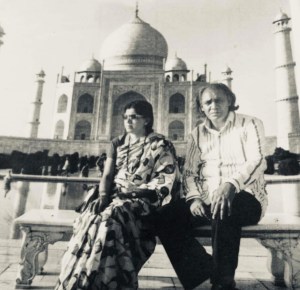
With his reputation growing in the field of inter religion he came increasingly to the notice of European institutions taking up a visiting professorship in Amsterdam and subsequently invited as Professor to the U.K. Selly Oak Colleges, Birmingham University, Centre of Islam and Christian Muslim Relations 1978-1982. As a result of this offer he made the important decision with his wife, Liaqat Begum 1942-2007 (d/o Aga Mumtaz Hussain), to relocate the family moving to the U.K. with their three Sons.
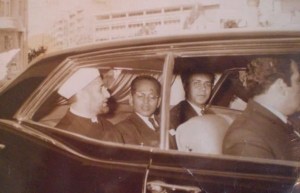
In his seminal speech in 1995 about his life’s work, delivered in Hyderabad, on his last ever visit back to his beloved city, he states, “I had discovered the limits of social science. I was moving towards philosophy and towards meta-physics…My main anchor was the West after 1977. I was rubbing shoulders with theologians and professors and thinkers across the world…I turned to Plato and to Plotinus; those great thinkers who influenced the West and also the Islamic world as my teachers. So in late 1980s I decided to revive what we in philosophy call the *classical discourse on soul.”

His speech (audio) along with interviews with leading thinkers conducted by his son, Musa, after his passing, can be found here. Interviews for example with Professor Noam Chomsky, Dr Rowan Williams (former Archbishop of Canterbury) along with a selection of Professor Askari’s writings are available on this blog “Spiritual Human” as a dedication to keeping alive Professor Askari’s work and vision after leaving this world. Highly recommend the audios of 1995 speech, interview with on Denver Radio “Endless Search” and interview by Karen Armstrong of Professor Askari.

Professor Askari’s stature as a scholar and thinker was acknowledged in his lifetime by figuring asone of the eight important Muslim thinkers of the last century in Bishop Kenneth Cragg’s book “The Pen and the Faith.” Professor Askari is acknowledged in the West as an uncompromising advocate for inter-religious spirituality. Professor Jane I Smith (Harvard Divinity School) writes about Professor Askari as being, “a long time partner in dialogue sessions sponsored through the World Council of Churches and other agencies, Askari has been a courageous and sometimes lone voice …Those who have known him through the years find it no surprise that the noted interpreter of Islam, Anglican Bishop Kenneth Cragg, has acknowledged Hasan Askari as one of the eight prominent Muslim thinkers of this century(20th) in “The Pen and the Faith.” A philosopher, a mystic, an historian and a social scientist, Askari pleads with religious persons everywhere to transcend the limitations we have placed on ourselves and to move together to new levels of understanding.”

Dr Charles Kimball writes, “Hasan Askari is among the most active and visible Muslims engaged in interreligious dialogue.* Since 1970, he has participated in numerous international and local dialogue meetings and lectured widely on various dimensions of what he terms “inter-religion”…His prominence in the field of Christian-Muslim encounter is noted by Kenneth Cragg, a pioneer and acknowledged authority in the area of Christian-Muslim relations”
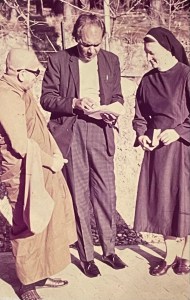
Bishop Kenneth Cragg writes, “Few thinkers in contemporary Islam have so tellingly explored the issues of inter-religion or undertaken them as strong vocation. *Hasan Askari holds a unique position in the search for unity of heart within the discrepancies, real or unreal, of religions in society.” Bishop Cragg’s chapter on Professor Askari is available on this blog and we thank their publisher for kind permission.
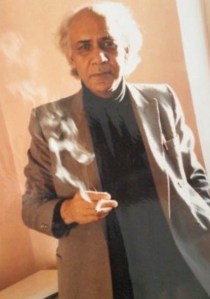
Professor Askari has taught at several universities including, Osmania, Aligarth, Beirut, Amsterdam, Birmingham (UK), Lebanon, Germany, Holland, United States, and has been a visiting professor at the universities of Antwerp and Denver. He was also the Louise Iliff Visiting Professor at the Iliff School of Theology in Denver (it was while teaching at Iliff that Professor Askari was interview by local radio, audio of those three inspiring interviews is also available on this blog). Professor Askari has been the first Muslim to address the Conference of European Bishops (Vienna 1985), and the International Council of Jews and Christians (Salamanca 1986). He has also given special lectures at several universities – Tehran, Frankfurt, Heidelberg, Nainz, Gottinghem, Rome, Utrecht, Leiden, Aberdeen, Oxford, Cambridge, Harvard, Uppsala and Stockholm.

Professor Askari’s international reputation rests on his vast experience as both consultant and participant at several international conferences and seminars on inter-religious dialogue: Ajoultoon 1970, Broummana 1972, Colombo 1974, London 1974, Bellagio 1976, Freiburg 1976, Beirut 1977, Hamburg 1982, Hanover 1984, The Hague 1985, Hartford 1982, Philadelphia 1986, Amsterdam 1990.

Professor Syed Hasan Askari’s works include: The Experience of Religious Diversity – co edited with Professor John Hick 1984. Spiritual Quest – An Inter Religious Dimension 1991, Towards a Spiritual Humanism – A Muslim Humanist Dialogue 1991. Alone to Alone : From Awareness to Vision 1991. Seers & Sages (co-edited with David Bowen) 1991. Solomons Ring : The Life and Teachings of a Sufi Master 1997 – dedicated to his late father. Selections from The Orations of Imam Ali ibn Talib, Hyderabad, 1965 (Urdu), Foundations of Applied Sociology, Allahbad, 1968. Inter-Religion, Aligarh, 1977. Society and State in Islam: An Introduction, Delhi, 1978. Reflections of the Awakened, Cambridge 1984.
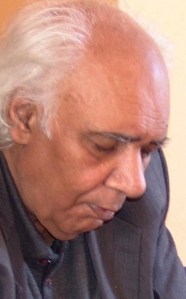
From Darush Shifa to Osmania, from Aligarh to Europe, from the United Kingdom to the United States, Syed Hasan Askari lived an extraordinarily rich life of personal achievement, high academic standing and an intellectual stature of original thought that continues to resonate to this day. From Sociology to Inter Faith Dialogue to the revival of the classical discourse on soul Professor Syed Hasan Askari leaves behind a tremendous body of work from which future generations may derive much needed inspiration.

Syed Hasan Askari passed away on 19th February 2008, at exactly 7am, in a small town in the North East of England, surrounded in person, and in spirt, by members of his Family. It was a cold foggy morning, frost on the ground. All was still, birds were busy in their morn song. He is survived by his three Sons to whom he dedicated his book, Spiritual Quest, a collection of his lectures.
Bio-sketch composed by Musa Askari
 One who is of a different race or colour is not an alien; nor one who is of different sex or age; nor is one the alien who practises a different art or craft, or belongs to a different class or caste; and nor one who believes differently, nor the stranger nor a foreigner. None of these is alien but one who is closest to you, who has possessed you from the very outset of your consciousness, who passes for your likeness, who has foisted himself on your back, who is your counter-image. If you are an unembodied reality, he presents you with body; if you trace your race with the archetype above you, he cites the evidence of your parents; if you relate to life beyond death, he ridicules you and brings in a vast range of arguments against it; it puts on your appearance, your face and your name, and a time comes when you end up regarding him as your only reality.
 The image as such isolates you from all your former and future lives. It obstructs your awareness on matters that go far beyond one life you are living now. It does not allow you to consider that you are perhaps back to pay for a former lapse or debt, to complete things left incomplete in former life, and that you may rise higher or fall lower as you eventually leave this world. So you are like Sinbad. Ask the one who has foisted himself upon you to get off from your back so that you can once more rise to your full stature and look further into vast distances both before you and behind you.


 Spiritual Human